- AI Infrastructure
- Cloud & Infra
- Global Trade
Silicon and Sovereignty: Inside Saudi Arabia's Technology Pivot
12 minute read
Washington and Riyadh advance nearly $1 Trillion in AI compute, chip access, and critical-minerals agreements, forming a new strategic technology framework.
Key Takeaways
-
The US–Saudi agreements lock in access to advanced Nvidia systems and establish HUMAIN’s plan to deploy up to 600,000 GPUs, marking the Kingdom’s first credible entry into global AI infrastructure at multi-gigawatt scale.
-
A parallel MP Materials–Ma’aden–Pentagon partnership builds a Saudi rare-earth refinery, strengthening US supply-chain security while advancing Riyadh’s non-oil industrial ambitions.
-
Market reaction underscores the deals’ operational weight, with Nvidia, MP Materials, and Tesla all rising as investors priced in concrete demand for compute, minerals, and hyperscale buildouts.
Introduction
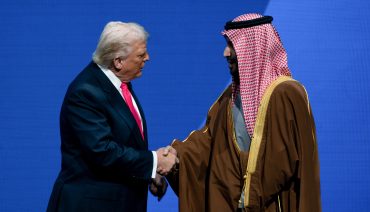
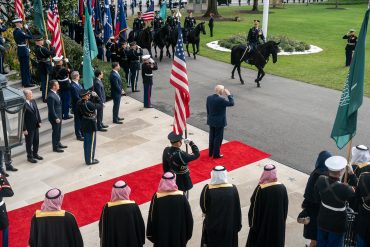
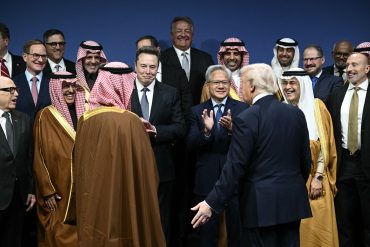
Crown Prince Mohammed bin Salman’s November visit to Washington delivered something rare in contemporary diplomacy: specificity. Over two days, culminating at the Kennedy Center’s U.S.-Saudi Investment Forum, the Kingdom and its American counterparts structured deals that move beyond the rhetoric of partnership into operational frameworks spanning artificial intelligence, semiconductor access, and critical minerals processing. The scale (approaching $1 trillion in commitments) matters less than the architecture. These agreements represent a calculated recalibration of how both nations intend to navigate the decade ahead.
The context is straightforward. Saudi Arabia confronts the mathematics of Vision 2030 with hydrocarbons no longer guaranteeing fiscal sustainability at current spending levels. The United States, meanwhile, faces intensifying competition for technological primacy while domestic constraints on energy, land, and capital allocation complicate data center expansion. What emerged from the November talks addresses both predicaments through interlocking arrangements that blend commercial ambition with strategic hedging.
The Compute Framework
The centerpiece is a Commerce Department export authorization granting Riyadh access to advanced American semiconductor systems under conditions designed to prevent technology leakage. The U.S. Department of Commerce authorized exports of advanced Nvidia GB300 platforms in quantities consistent with initial approvals to HUMAIN, the Public Investment Fund-backed AI entity tasked with building the Kingdom’s computational infrastructure. A parallel approval went to the UAE’s G42, signaling regional coordination.
HUMAIN’s stated objective is deployment of up to 600,000 Nvidia GPUs over three years, distributed across hyperscale facilities in both Saudi Arabia and the United States. The ambition here is not merely to acquire chips but to construct what Nvidia describes as “AI factories”: multi-gigawatt installations leveraging the Kingdom’s abundant energy and available land to achieve scale unattainable in more constrained geographies. If executed, these facilities would position Saudi Arabia as a serious participant in global AI infrastructure, not simply a consumer of Western technology.
Alongside the chip approvals, Elon Musk’s xAI formalized a framework agreement with HUMAIN to co-develop hyperscale GPU data centers, beginning with a 500-megawatt facility. The partnership integrates xAI’s Grok model into HUMAIN’s ecosystem for deployment across Saudi governmental and commercial applications. For xAI, the arrangement alleviates domestic bottlenecks in power availability and real estate while accessing Saudi capital for expansion. For Riyadh, it embeds frontier AI capabilities into systems intended to drive everything from energy optimization to autonomous governance workflows.
The structure reflects pragmatism on both sides. Saudi investments (potentially $50 billion in near-term AI expenditure) inject capital into American semiconductor and infrastructure firms at a moment when domestic financing faces regulatory scrutiny. Simultaneously, the Kingdom acquires not just hardware but training programs and technical partnerships with Nvidia designed to develop indigenous expertise. The arrangement embeds American standards into Gulf digital architecture, creating dependencies that serve Washington’s strategic interest in countering Chinese technological influence without direct confrontation.
Securing the Supply Chain
Adjacent to the AI agreements, a separate framework addresses critical minerals, specifically rare earths essential for magnets used in electric vehicles, wind turbines, and defense systems. MP Materials, the dominant American rare-earth producer, partnered with the U.S. Department of Defense and Saudi mining conglomerate Ma’aden to establish a refinery in the Kingdom. The joint venture allocates a combined 49% stake to MP and the DoD, with Ma’aden retaining at least 51%.
The facility will process global feedstock into separated rare-earth oxides, serving both U.S. and Saudi manufacturing while diversifying supply chains currently concentrated in China. MP contributes separation and refining expertise honed at its Mountain Pass, California operations. The DoD provides non-recourse financing, ensuring the project aligns with defense-industrial priorities. This builds on MP’s earlier July commitment with the Pentagon, which involved over $1 billion in U.S. investments for expanded domestic processing and magnet production.
The logic is supply-chain resilience. Rare earths, despite their name, are not scarce; the challenge lies in refining capacity. China controls approximately 90% of global processing, creating vulnerabilities for Western manufacturers. By establishing a Saudi facility with U.S. technical oversight and Pentagon financing, the partnership fragments this monopoly without requiring full onshoring, a balance between national security imperatives and economic efficiency.
For MP Materials, the Saudi refinery unlocks access to diverse feedstock sources beyond its California mine, enhancing operational flexibility. For Riyadh, it advances diversification objectives while positioning Ma’aden as a strategic player in the global minerals trade. The arrangement mirrors broader U.S. efforts with allies like Japan and Australia to construct resilient supply networks independent of adversarial dependencies.
Market Validation
Financial markets responded with measured optimism. Nvidia shares rose from $181.36 on November 18 to $191.96 by early trading November 20, reflecting investor confidence in incremental demand despite ongoing supply constraints. MP Materials climbed more sharply, 8.6% to $63.55 on November 19, extending to $64.65 the following day, as participants priced in the strategic value of supply-chain diversification. Tesla, serving as a proxy for Musk’s ecosystem including xAI, edged upward from $401.25 to $408.31 over the same period, buoyed by perceptions of synergies across his ventures.
These movements, while modest in isolation, signal institutional recognition that the agreements carry operational substance. The chip authorizations represent tangible orders in sectors facing persistent bottlenecks. The minerals framework addresses a documented vulnerability in high-technology manufacturing. Investors are betting not on speculative potential but on execution of defined projects with credible participants.
Strategic Tensions
Yet the architecture reveals inherent tensions. Saudi Arabia maintains substantive economic ties with China, complicating Washington’s efforts to construct exclusive technological alliances. The export authorizations embed rigorous security protocols precisely to prevent re-export or technology transfer to adversaries. This conditions economic engagement on strategic compliance, a dynamic that could strain under geopolitical pressure.
Similarly, the critical minerals framework complements rather than replaces U.S. domestic capacity. MP’s California operations remain central to Pentagon supply chains, with the Saudi refinery serving as an augmentation. Should tensions escalate, whether in the Gulf or broader geopolitical conflicts, reliance on overseas processing introduces vulnerabilities the arrangement ostensibly mitigates.
Budget realities also loom. Saudi megaprojects have consistently encountered overruns, and the $1 trillion investment figure (though expanded from an initial $600 billion commitment during President Trump’s May trip to Riyadh) remains aspirational absent transparent disbursement schedules. Oil price volatility complicates fiscal planning, potentially constraining the Kingdom’s ability to fulfill commitments at projected scales.
Implications
These deals nonetheless mark a substantive evolution in the U.S.-Saudi relationship, extending beyond traditional oil-and-arms commerce into the digital domain. For Riyadh, they offer a pathway toward economic diversification grounded in concrete infrastructure rather than aspirational visions. For Washington, they provide capital infusion and strategic positioning in regions where Chinese influence has grown.
The outcome will depend on execution. HUMAIN’s capacity to operationalize 600,000 GPUs hinges on resolving power, cooling, and talent constraints at unprecedented scales. The MP-Ma’aden refinery requires technical integration across continents with divergent regulatory environments. xAI’s deployment of Grok into Saudi systems demands localization and security protocols yet to be fully defined.
Still, the framework is coherent. In an era where computational capacity correlates directly with economic competitiveness, these arrangements attempt to align capital, technology, and resources across complementary geographies. Whether they produce enduring transformation or merely digitize existing dependencies will determine their legacy. For now, they represent the most detailed blueprint yet for how advanced economies and resource-rich states might structure collaboration in the age of artificial intelligence.