- Aerospace Innovation
- Space Economy
- Space Tech
Rocket Lab Builds Vertical Integration to Lead Space Economy
8 minute read
Space sector consolidation reveals Rocket Lab’s integration capabilities drive market leadership while competitors struggle with acquisition execution and operational challenges.
Key Takeaways
- Rocket Lab expands into full-stack space infrastructure with vertically integrated capabilities spanning launch systems, spacecraft manufacturing, optical intelligence payloads, and high-throughput laser communications, supported by more than 1 billion dollars in liquidity.
- Contract visibility strengthens as Rocket Lab reports a 1.2 billion dollar backlog, 48 percent year-over-year revenue growth in Q3, and GAAP gross margins rising to 37 percent, reflecting improving scale economics across launch and spacecraft programs.
- Electron achieves 18 successful missions in 2025 and demonstrates dual-hemisphere rapid launch cadence, while Neutron advances toward a 2026 debut with more than 360 million dollars invested to date and NASA integration underway.
Introduction
The commercial space industry is entering a new phase. After years of proliferation, characterized by venture capital flowing freely to dozens of startups promising revolutionary access to orbit, market forces are now imposing discipline. High capital requirements, supply chain fragility, and the unforgiving economics of aerospace manufacturing are separating viable businesses from those destined for absorption or collapse. Rocket Lab USA has positioned itself on the winning side of this divide.
With more than $1 billion in liquidity following a September 2025 equity raise that brought in approximately $468.8 million, the company possesses the financial flexibility increasingly rare among second-tier space firms. This balance sheet strength arrives at a moment when smaller competitors face mounting pressures. The result is predictable: consolidation. Rocket Lab is not waiting passively for opportunities to emerge. It is actively constructing an integrated platform spanning launch vehicles, spacecraft manufacturing, and specialized payloads.
The Strategic Logic of Integration
Rocket Lab’s approach departs from the traditional aerospace model, where prime contractors orchestrate complex webs of suppliers and subcontractors. Instead, the company is building end-to-end capabilities that allow it to control more of the value chain. The rationale is straightforward. In an industry where mission delays cascade through interdependent systems and where national security considerations increasingly dictate supplier relationships, vertical integration reduces risk and improves execution predictability.
This strategy manifests in two recent acquisitions. In August 2025, Rocket Lab closed the $275 million purchase of Geost, a firm specializing in optical payloads for intelligence and surveillance applications. Geost’s imaging sensors and related technologies fit directly into Rocket Lab’s spacecraft production capability. The acquisition addresses a growing requirement articulated in the Department of Defense’s 2025 Space Industrial Base Strategy: resilient, domestically controlled space systems that can be deployed rapidly in response to evolving threats.
The second acquisition, still in progress, involves Mynaric, a German laser communications specialist. Announced in March 2025 for up to $150 million, the deal has navigated Mynaric’s financial restructuring under German insolvency law and passed required sovereignty reviews. Mynaric’s CONDOR terminals, capable of data rates exceeding 100 gigabits per second, represent a critical technology as satellite constellations demand higher bandwidth for both commercial and government applications. If completed, the acquisition will give Rocket Lab proprietary access to communications infrastructure increasingly essential for next-generation space architectures.
These moves are not opportunistic. They reflect a deliberate effort to internalize capabilities that customers value and that competitors must source externally. Peter Beck, Rocket Lab’s chief executive, has framed integration as a means to simplify missions while controlling costs and timelines. For government clients navigating complex procurement processes and commercial operators managing tight budgets, this proposition carries weight.
Government Validation and the National Security Angle
Government contracts provide both revenue stability and strategic validation. In March 2025, the U.S. Space Force awarded Rocket Lab a $5 million task order under the National Security Space Launch Phase 3 framework. While modest in itself, the award positions the company to compete for missions valued at up to $5.6 billion over a decade. This represents a significant expansion beyond Rocket Lab’s historical focus on small satellite launches.
NASA has similarly recognized Rocket Lab’s broadening capabilities. In August 2025, the agency selected the company among six firms to conduct orbital transfer vehicle studies aimed at improving payload delivery efficiency. These awards, documented in federal spending records, signal that Rocket Lab is moving beyond niche applications into the mainstream of government space operations.
The defense dimension is particularly salient. As geopolitical competition extends into orbit, the Pentagon is prioritizing resilient space systems that can withstand potential adversary actions. This requires not just launch capacity but also sophisticated payloads, secure communications, and rapid reconstitution capabilities. Rocket Lab’s integrated model aligns with these requirements in ways that fragmented suppliers cannot easily replicate.
Electron’s Operational Momentum
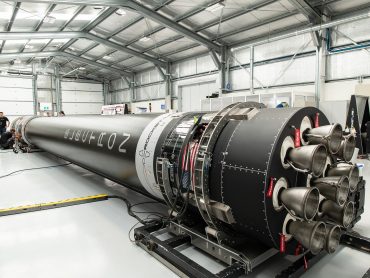
While acquisitions and development programs shape future potential, current performance hinges on the Electron rocket. This small launch vehicle, designed for payloads up to 300 kilograms, has achieved operational maturity that few competitors in its class can match. Operating from launch sites in New Zealand and Virginia under Federal Aviation Administration licenses, Electron has reached a sustained cadence that demonstrates manufacturing and operational scale.
By November 21, 2025, Rocket Lab had completed 18 successful Electron launches for the year, surpassing the 2024 record of 16. Notably, this included back-to-back missions on November 20 and 21 from different hemispheres, a logistical and technical feat that underscores the company’s operational sophistication. The contract backlog exceeded $1.2 billion in the third quarter, providing revenue visibility well into future periods.
Financial metrics reflect improving economics. GAAP gross margins reached 37% in the third quarter of 2025, up from 25% a year earlier. This expansion stems from production efficiencies as manufacturing volumes increase. Third-quarter revenue totaled $155 million, representing 48% year-over-year growth. These figures, drawn from regulatory filings, indicate that Rocket Lab is achieving the scale economies essential for sustainable profitability in a capital-intensive industry.
Neutron and the Medium-Lift Challenge
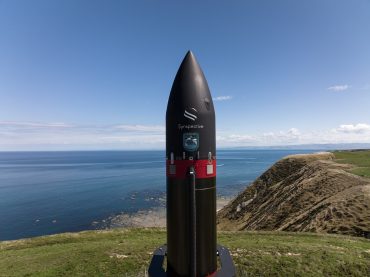
Electron addresses a specific market segment, but larger satellites and constellation deployments require greater lift capacity. Rocket Lab’s answer is Neutron, a medium-lift vehicle designed to carry 15,000 kilograms to low Earth orbit. The rocket targets the growing market for constellation deployment, where operators need to launch multiple satellites per mission to build out networks efficiently.
Development has encountered delays. Originally anticipated for a 2025 debut, the first flight has shifted to 2026 due to integration work, as announced in November 2025. The Archimedes engines powering Neutron have undergone testing at NASA’s Stennis Space Center, a standard validation step for new propulsion systems. NASA has modified existing contracts to include Neutron for Venture-Class missions launching from Wallops Island, providing an early customer and operational validation.
Neutron represents a substantial investment. Rocket Lab expects to spend approximately $360 million on the program by the end of 2025. This level of expenditure, while significant, remains manageable given the company’s liquidity position. Success with Neutron would position Rocket Lab to compete directly with SpaceX’s Falcon 9 in certain mission profiles, a market currently dominated by a single provider.
The company has also secured $23.9 million in CHIPS Act funding for semiconductor manufacturing facilities in Albuquerque. This investment supports internal production of components critical to spacecraft and launch systems, further advancing the vertical integration strategy.
Market Dynamics and Valuation Considerations
Rocket Lab’s stock closed at $40.30 on November 21, 2025, giving the company a market capitalization of approximately $21.5 billion. This valuation reflects both optimism about the company’s strategic position and the volatility inherent in growth-stage aerospace firms. The stock experienced a 38% decline over the preceding month, though recent analyst upgrades contributed to a modest recovery.
The broader space industry faces cyclical headwinds. Interest rate increases affect capital-intensive businesses, and macroeconomic uncertainty can delay commercial contracts. Regulatory processes, including FAA launch approvals and international deal reviews, introduce execution risk. These factors will continue to influence near-term performance.
However, structural trends support long-term demand. Climate monitoring, telecommunications, earth observation, and national security applications all require expanded satellite infrastructure. As this infrastructure scales, the value of integrated providers capable of delivering complete solutions increases. Rocket Lab’s position at the intersection of launch, spacecraft production, and specialized payloads addresses this market evolution.
Conclusion
Rocket Lab has moved deliberately to capitalize on consolidation dynamics in the commercial space sector. Through targeted acquisitions, operational execution with Electron, and strategic investments in Neutron, the company is building a platform that spans critical capabilities. Financial strength provides the flexibility to pursue opportunities as smaller competitors falter. Government contracts validate the strategic approach and provide stable revenue streams.
The company faces real challenges, including development timelines, regulatory complexity, and macroeconomic headwinds. Yet its integrated model, operational track record, and balance sheet position it favorably as the industry matures. For investors and policymakers evaluating the space sector’s evolution, Rocket Lab represents a case study in how vertical integration and financial discipline can create durable competitive advantages in a consolidating market.