
- AI Governance
- Cybersecurity
- Enterprise Security
OpenAI Faces Growing Pains as Expansion Outpaces Governance
12 minute read
OpenAI confronts rising operational strain as a vendor breach, enterprise exposure, and accelerated expansion amplify questions about governance, trust, and resilience.
When Growth Outpaces Governance
The security incident OpenAI disclosed on November 26 appears minor in isolation. A former analytics vendor, Mixpanel, suffered a breach affecting limited user data from OpenAI’s API platform. No chat histories were exposed. No credentials compromised. The company acted swiftly, severing ties with Mixpanel and notifying affected users within hours of receiving full details.
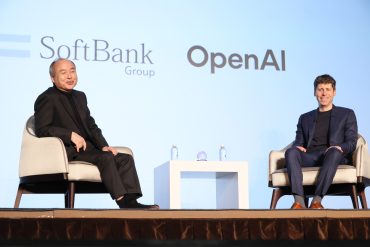
Yet the episode arrives at a moment when OpenAI’s operational resilience faces mounting questions. The company now carries a $500 billion valuation following its October share sale and operates at the center of an industry some fear resembles a speculative bubble. SoftBank’s sale of its entire Nvidia stake for $5.83 billion in October to redirect funds toward OpenAI exemplifies this concentration of capital. Meanwhile, OpenAI confronts intensifying competition as users report declining product quality. The breach itself matters less than what it reveals about the strains of hypergrowth in an environment where trust represents the primary currency.
The Mechanics of Exposure
Mixpanel identified the intrusion on November 8, tracing it to a smishing attack that compromised portions of its infrastructure. By the following day, the company confirmed that customer analytics data had been extracted. OpenAI learned of the investigation immediately but received specifics only on November 25, prompting its public disclosure within 24 hours.
The exposed information included names, email addresses, approximate location data derived from browser metadata, device details, and associated organization identifiers. The scope remained narrow. Users of ChatGPT and other consumer products went unaffected. Platform.openai.com users bore the impact, though even here the data lacked the sensitivity that would trigger material harm under most regulatory frameworks.
Mixpanel responded with standard protocols: terminating active sessions, rotating credentials, blocking suspicious network traffic, and engaging forensic investigators. OpenAI moved decisively to eliminate the vendor from its systems and initiate a comprehensive review of third-party relationships. Both responses reflect established practice. Neither suggests negligence.
The Enterprise Dimension
The breach’s significance extends beyond the data compromised. OpenAI now derives approximately 30 percent of its revenue from enterprise offerings, a proportion that has grown steadily since ChatGPT Enterprise launched in 2023. The August 2025 rollout to the entire U.S. federal workforce marked a watershed moment for institutional adoption. Major consulting partnerships with PwC, which became OpenAI’s largest enterprise customer in 2024, according to The Wall Street Journal, and an expanded arrangement with Bain & Company in October 2024 demonstrate the company’s penetration into organizations that handle sensitive client information.
Recent collaborations amplify this exposure. Deals with Databricks in September 2025 and Intuit in November 2025, each projected to generate over $100 million in revenue, rely heavily on API-driven solutions for customized business applications. These relationships depend on uncompromising data security. Enterprise clients integrating OpenAI’s capabilities into proprietary workflows require absolute confidence that their information remains protected not just within OpenAI’s systems, but across its entire vendor ecosystem.
The Mixpanel incident, though it compromised no proprietary business data, illuminates precisely the vulnerability enterprise clients fear most. A peripheral vendor handling analytics for API improvements becomes a vector for exposure. The data extracted could enable sophisticated phishing campaigns targeting organizations identified through the breach, potentially accessing far more sensitive information through social engineering. For companies evaluating whether to deepen their reliance on OpenAI’s platform, the episode raises uncomfortable questions about supply chain oversight.
The Context That Elevates Risk
OpenAI reported $4.3 billion in revenue for the first half of 2025, representing 16 percent growth over the entirety of 2024. Full-year revenue projections reach $13 billion. Operating costs, however, are expected to hit $22 billion, producing a $9 billion loss even as the company commits to infrastructure investments exceeding $1 trillion over the coming decade.
These figures would challenge any organization’s operational discipline. OpenAI has announced partnerships with NVIDIA for 10 gigawatts of data center capacity, Broadcom for custom silicon, AMD for an additional 6 gigawatts of GPU resources, and Foxconn for domestic manufacturing. The expanded Microsoft collaboration includes five new facilities under the Stargate initiative, accelerating a $500 billion commitment ahead of schedule.
This velocity of expansion inevitably strains internal systems. Every new partnership introduces potential vulnerabilities. Every additional vendor creates another surface for exploitation. The breach demonstrates how peripheral relationships can generate disproportionate exposure, particularly when the affected user base consists increasingly of enterprise clients whose trust determines contract renewal and expansion.
Eroding Confidence on Multiple Fronts
The security lapse compounds challenges already straining user confidence. ChatGPT performance complaints have proliferated in recent months, with longtime users reporting inconsistent outputs, context loss, and diminished accuracy on tasks previously handled reliably. Heavy users describe capabilities quietly withdrawn and excessive content restrictions that impede legitimate workflows. The perception of a degraded product, whether objectively accurate or not, corrodes the trust essential for enterprise adoption.
Holy ***. I’ve used ChatGPT every day for 3 years. Just spent 2 hours on Gemini 3. I’m not going back. The leap is insane — reasoning, speed, images, video… everything is sharper and faster. It feels like the world just changed, again.
Competition has sharpened precisely as these concerns emerge. Google released Gemini 3 on November 18, drawing immediate praise for benchmark superiority and tighter integration across its ecosystem. Marc Benioff, who spent three years as a daily ChatGPT user, switched to Gemini 3 after a brief trial and declared publicly he would not return. His comments carry weight beyond personal preference. They signal a broader industry reassessment of competitive positioning just as OpenAI navigates its most aggressive expansion phase.
The Bubble Question
Speculation about an artificial intelligence bubble has moved from fringe commentary to mainstream discourse. OpenAI’s own chief executive, Sam Altman, has acknowledged conditions reminiscent of the late 1990s technology surge. Critics point to trillion-dollar infrastructure commitments against projected annual losses approaching $10 billion, questioning whether returns can justify the capital deployed.
The comparison carries risks of oversimplification. Underlying AI capabilities continue advancing, and applications across industries demonstrate tangible productivity gains. Yet valuations have detached from near-term financial performance in ways that heighten vulnerability to sentiment shifts. A meaningful market correction would ripple through employment, investment flows, and strategic planning across the technology sector.
Security incidents, even modest ones, acquire disproportionate significance in this environment. Investors underwriting a $500 billion valuation expect operational excellence at scale. Regulators implementing frameworks such as the EU AI Act and FTC transparency requirements emphasize supply chain oversight. Enterprise clients evaluating proprietary deployments scrutinize data handling protocols with particular intensity. Each vulnerability, no matter how quickly addressed, reinforces doubts about whether growth has outpaced institutional maturity.
Implications for Strategic Positioning
OpenAI’s response to the Mixpanel breach demonstrates competent crisis management. The company terminated the relationship, conducted systematic vendor reviews, and communicated transparently with affected users. These actions reflect organizational discipline and appropriate prioritization.
Yet the incident illustrates structural challenges inherent to hypergrowth trajectories. Security infrastructure must scale in parallel with product development, partnership expansion, and revenue ambitions. Gaps emerge not from individual failures but from the velocity of change itself. Organizations doubling in complexity year over year struggle to maintain the governance rigor that slower growth affords.
The enterprise revenue concentration intensifies this challenge. As OpenAI derives growing portions of its income from organizations with stringent security requirements, the margin for error contracts. A breach affecting the federal workforce deployment or a major consulting partnership would carry consequences far beyond the Mixpanel incident’s limited scope. The company’s legal entanglements, including its June 2025 response to The New York Times lawsuit over training data, suggest regulatory and reputational pressures will only intensify.
For stakeholders evaluating OpenAI’s trajectory, the breach serves as a reminder that operational risk compounds as scale increases. The company’s strategic position remains formidable. Its technical capabilities continue advancing, as evidenced by the October releases of GPT-5 Pro and Sora 2. Its financial resources enable sustained investment through market volatility.
But maintaining leadership requires more than technological innovation and capital deployment. It demands the institutional capacity to manage complexity, anticipate vulnerabilities, and sustain user confidence through periods of turbulence. The Mixpanel incident, modest in immediate impact, raises questions about whether that capacity has kept pace with ambition. In an industry where trust determines adoption and sentiment drives valuation, these questions matter considerably more than the breach itself.


