Ahead of Consensus.
Intelligence across tech and capital markets, for investors, policymakers, and business leaders.
11 minute read
Key Takeaways
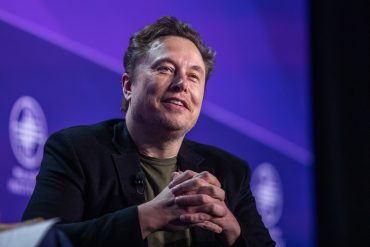
On the evening of March 21, 2026, inside the decommissioned shell of Austin’s Seaholm Power Plant, Elon Musk delivered what may prove to be the most consequential industrial announcement of the decade. The venue was theatrical in the way Musk favours: raw, capacious, evocative of industrial ambition past. The substance, however, was anything but nostalgic.
Terafab, he told a global livestream audience, is “the next step towards becoming a galactic civilization.” Strip away the register of that phrase and what remains is a precise engineering and commercial proposition: a joint Tesla-SpaceX manufacturing complex, deeply embedded with xAI, designed to produce more than one terawatt of computing power annually. Logic chips, memory, and advanced packaging would be produced under a single roof, at volumes the semiconductor industry has never attempted. Most of that output is destined for orbit, powering solar-driven AI satellites; the remainder feeds Tesla’s Optimus humanoid robots, its autonomous vehicle fleet, and the training clusters upon which xAI’s ambitions depend.
The announcement did not arrive without warning. At Tesla’s 2025 annual meeting, Musk had sketched the concept as “like Giga but way bigger.” On the January 2026 fourth-quarter earnings call, he was characteristically direct: without in-house fabrication at scale, “we’re going to be limited by supplier output of chips.” What crystallised between those moments and last Saturday evening was a convergence of pressures. Tesla’s Dojo and Cortex supercomputers are scaling. xAI’s training infrastructure is consuming GPUs at a rate that external allocation queues struggle to match. Starship is approaching the orbital cadence that would make large-scale solar deployment viable. Each thread, separately insufficient, has become collectively decisive. Chips are the new bottleneck, and Musk’s response is to eliminate the bottleneck entirely.
The design philosophy behind Terafab is recognisable to anyone who has followed Musk’s manufacturing career. Complexity is the enemy; the objective is not versatility but velocity. The main production complex will house two dedicated fabs, each optimised for a single chip design. The first will produce an inference-focused processor for vehicles and robots. The second, engineered to run hotter and reduce radiator mass, will serve space and xAI workloads. By eliminating multi-product line complexity, the process flow becomes linear and relentless, susceptible to the kind of iterative acceleration Musk described in follow-up commentary: “A super high production rate allows us to test very quickly what steps can be deleted, simplified or sped up.”
An advanced technology fab on the existing Giga Texas campus will iterate designs daily, feeding improvements back into the main production lines within a week. The full facility will require thousands of acres and more than ten gigawatts of power at maturity, roughly twenty times the draw of a typical large foundry. For context, the entire Giga Texas footprint is inadequate to contain it, and site selection remains open, with multiple locations under parallel review.
This is Musk’s characteristic approach to large capital commitments: maintain optionality until the last viable moment, then move with decisive speed. A careers landing page at terafab.ai, launched simultaneously with the announcement, funnels applicants directly into Tesla, SpaceX, and xAI postings for semiconductor process engineers, mask designers, and high-volume manufacturing specialists. The signal is deliberate. Terafab’s execution will depend on assembling talent that does not currently sit within any of the three entities.
The orbital dimension of Terafab is not an extravagance. It is load-bearing. Average U.S. electricity consumption sits at roughly half a terawatt. The compute density required to sustain true artificial general intelligence at the scale Musk envisages would overwhelm terrestrial grid capacity before the decade is out, regardless of how aggressively new data centres are built. The solution, in Musk’s framework, is to bypass Earth’s grid constraints entirely. Cheap, frequent Starship launches deliver solar arrays into orbit, where energy is converted on-station and directed to orbital compute infrastructure. “100 million tons of solar capture into space, per year” is how he has framed the eventual ambition. Terafab supplies the silicon; Starship supplies the lift.
This framing matters for how investors and analysts should read the announcement. The project is not merely a large semiconductor plant. It is the connective tissue between Musk’s interlocking industrial ecosystems: Optimus requires inference chips to function; xAI requires training capacity to advance; SpaceX requires orbital AI to realise the full commercial potential of its constellation infrastructure. Terafab, if it delivers, transforms each of those businesses from supply-constrained to self-sustaining. If it does not, the constraints tighten across all three simultaneously.
The semiconductor industry has spent the past decade consolidating around a small number of fabrication giants whose roadmaps are calibrated to consumer electronics and data-centre demand. Global capacity is projected to grow at roughly twenty per cent annually. Musk’s requirements, measured in the compute needed for hundreds of millions of Optimus units and orbital AI constellations, exceed that trajectory by orders of magnitude. The gap between what the market will supply and what Musk’s companies require is not a scheduling problem. It is a structural one, and vertical integration is his answer.
The strategic logic is familiar from Tesla’s battery cell programme and SpaceX’s Merlin engine development. In both cases, the conventional wisdom held that established suppliers were adequate and that in-house development was unnecessary cost. In both cases, Musk demonstrated that the ability to control the manufacturing curve, to iterate, simplify, and scale at a pace external partners could not match, produced a durable competitive advantage. The question with Terafab is whether the same discipline can be applied to semiconductor fabrication, a domain of substantially greater technical complexity and significantly higher capital intensity.
The honest answer is that neither Tesla nor SpaceX has wafer-processing history. The learning curve will be steep. Dojo, Tesla’s custom silicon effort first announced in 2021, remains a work in progress at production scale. Capital expenditure for Tesla alone is set to more than double in 2026 relative to the prior year. The market’s response to the formal announcement reflected this tension: Tesla (NASDAQ: TSLA) moved with the contained volatility that now characterises reactions to Musk’s larger pronouncements, neither euphoric nor dismissive, pricing in both the scale of the prize and the weight of execution risk.
For policymakers, Terafab arrives at a moment of acute sensitivity around semiconductor sovereignty. The project is self-financed, outside the CHIPS Act framework, and anchored within Musk-controlled entities. Success would concentrate advanced domestic compute capacity in a single industrial ecosystem with limited external oversight. That concentration carries both strategic and regulatory implications that Washington has yet to fully address.
For the semiconductor industry, the announcement is a structural provocation. TSMC, Samsung, and Intel build fabs for markets. Musk is proposing to build for a single, internally defined need at a scale that would, if realised, alter the competitive dynamics of the entire supply chain.
What is not in question is the clarity of intent. Terafab is not a hedge or a negotiating position with existing suppliers. It is a declaration that the chip supply chain, as currently constituted, is insufficient for the civilisation Musk intends to build. The timeline will stretch. The capital requirements will likely exceed initial estimates. Some designs will fail before they succeed. These are not reasons for disbelief; they are the ordinary conditions under which Musk’s most consequential bets have historically been placed and, eventually, won.
The alternative, as he put it on stage in Austin, is stagnation. For the companies involved, for their investors, and for the broader trajectory of artificial intelligence, that framing deserves to be taken seriously.