Ahead of Consensus.
Intelligence across tech and capital markets, for investors, policymakers, and business leaders.
12 minute read
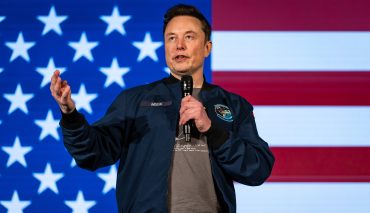
Elon Musk unveiled Macrohard, a joint venture between Tesla and his artificial intelligence company xAI, with an ambition that goes well beyond incremental automation: to simulate the complete operational functions of a software enterprise using AI agents. The name, a pointed reference to Microsoft, signals both the target and the tone.
The system works across two distinct layers. xAI’s Grok model functions as the strategic coordinator, handling high-level reasoning and decision sequencing. Tesla’s AI agent operates beneath it, processing real-time inputs, including screen visuals, keyboard activity, and mouse movements, across a rolling five-second window. The architecture is deliberate. Grok sets direction; Tesla’s agent executes. Together, Musk argues, they can emulate what entire human organizations currently do.
In principle, it is capable of emulating the function of entire companies.
This is not a prototype announced in isolation. It emerges from Tesla’s $2 billion investment in xAI, disclosed in a January 2026 SEC filing, and from a sustained effort by Musk to draw his companies into closer operational alignment. The conceptual origins date to August 2025, when Musk first suggested on X that software companies lacking hardware manufacturing could be fully replicated by AI systems. What was then a speculative post has since acquired organizational structure, engineering resources, and institutional capital.
To assess Macrohard accurately, one has to account for the broader infrastructure Musk has assembled over the past eighteen months. Tesla’s AI capabilities extend far beyond automotive applications. By 2025, the company had deployed over 100,000 Nvidia H100 GPUs for training purposes, with plans to scale that figure significantly. The computational foundation now serves multiple purposes simultaneously, with Macrohard representing its most commercially provocative application to date.
The financial architecture underpinning that infrastructure received a decisive reinforcement in January 2026, when xAI closed a Series E funding round at $20 billion, surpassing its initial $15 billion target and valuing the company at approximately $230 billion post-money. The round drew a consortium of institutional and strategic investors, including Valor Equity Partners, StepStone Group, Fidelity Management & Research Company, the Qatar Investment Authority, MGX, and Baron Capital Group. Notably, both NVIDIA and Cisco participated as strategic investors, lending the round a dimension beyond pure capital. For a company founded in 2023, the valuation reflects both the pace of Grok’s development and the market’s assessment of xAI’s structural position within the AI landscape.
That capital is earmarked for precisely the kind of infrastructure Macrohard demands: large-scale GPU cluster construction and continued enhancement of Grok’s reasoning capabilities. It also provides the financial depth to absorb the cost of resource-intensive projects without pressuring Tesla’s balance sheet, a consideration that matters when evaluating how seriously to take Musk’s stated timelines.
In February 2026, xAI merged with SpaceX, consolidating significant data center capacity, including the Colossus facility in Memphis. The merger, which implied a $50 billion valuation for xAI at the time of its earlier assessments, reflects a pattern Musk has executed before: absorbing adjacent assets to reduce friction, share infrastructure, and compound capability. Tesla’s acquisition of SolarCity a decade ago followed similar logic, however contested its rationale was at the time.
Grok’s integration into Tesla vehicles, which began as a user interface enhancement, now reads as the preliminary stage of a deeper convergence. The consumer-facing chatbot was the proof of concept. Macrohard is the institutional application. The project also operates within the context of Tesla’s Optimus humanoid robot program, which is ramping production at the Fremont facility for internal deployment by late 2026. Musk has described Macrohard as the digital counterpart to Optimus, a pairing that maps AI agents onto clerical and cognitive tasks while the physical robots address manual ones.
The financial case Macrohard presents to investors is straightforward, even if its execution is not. Tesla’s electric vehicle growth, forecast at 15 percent for 2026 versus 38 percent the prior year, is decelerating. Macrohard offers a credible narrative for software-driven revenue diversification, one that analysts at Wedbush have already quantified at a potential $10 billion in additional annual revenue from software services by 2030.
The implied threat to incumbents is substantial. Microsoft’s Azure and Office product lines generate more than $60 billion annually, serving an enterprise customer base that depends on layered human workflows, management hierarchies, and institutional knowledge. If AI systems can compress or replace those workflows at scale, the pricing power that underpins that revenue base weakens considerably. Musk has positioned Macrohard explicitly as an assault on that model, arguing that software companies without hardware are structurally vulnerable to AI-led commoditization.
The labor economics are equally significant. Research adapted to this context suggests AI automation of knowledge work could reduce costs in relevant sectors by 40 to 60 percent. That range, even discounted for optimism, implies a structural shift that would reshape hiring, compensation, and organizational design across industries far beyond software. The participation of NVIDIA and Cisco in xAI’s Series E adds a further dimension to this picture: two companies whose enterprise revenues depend heavily on the infrastructure and networking layers of corporate technology are, in effect, endorsing the trajectory that Macrohard represents.
Macrohard’s institutional ambitions are accompanied by governance questions that senior investors cannot reasonably set aside. Tesla shareholders, in a lawsuit filed in 2024 that remains active, allege that Musk’s formation of xAI diverted opportunities that rightfully belonged to Tesla’s shareholders. The $2 billion investment in xAI, framed in SEC disclosures as evaluative and exploratory, does not fully resolve those concerns. It deepens the entanglement between Musk’s public company obligations and his private enterprise interests.
The scale of xAI’s Series E compounds that complexity. A company of this institutional weight, backed by sovereign wealth, global asset managers, and two of the technology industry’s most consequential strategic investors, now operates on a plane where its decisions carry systemic significance. As Macrohard develops, regulatory attention from bodies including the FTC is probable given the concentration of AI capability, data access, and market positioning within a single conglomerate structure.
Musk’s counterargument, that Tesla operates independently from xAI’s licensing arrangements, has a degree of merit but does not address the opportunity cost argument at the center of the shareholder lawsuit. These are not abstract concerns. For institutional investors, the governance structure of Musk’s interlocking enterprises represents a risk variable that exists independently of the technology’s promise.
Musk has stated that AI systems capable of performing any computer-based human task could be operational before the end of 2026. That timeline should be read as aspirational rather than contractual. Technology development at this scale is rarely linear, and the organizational hurdles Macrohard has already encountered, including leadership transitions and an earlier halt in data annotation work involving 600 contractors, indicate that execution risk is real.
What is already visible, however, is the direction. Markets responded to the announcement with measured optimism, pushing Tesla shares (NASDAQ: TSLA) up 2.15 percent to $406.98. That reaction reflects less a verdict on Macrohard’s technical readiness than a recognition that the project substantively expands Tesla’s addressable market and conceptual valuation. Behind that market signal sits a funding base, a hardware ecosystem, and a set of strategic partnerships that give this particular venture more institutional grounding than most of its predecessors.
The deeper significance of Macrohard is structural. It represents a serious, well-resourced attempt to replace the organizational logic of the software company with a different model: one in which AI agents, coordinated by large language models, produce the outputs that human departments currently generate. Whether that attempt succeeds in full, in part, or demands another iteration, it will recalibrate how companies, investors, and policymakers think about the economics of knowledge work. That recalibration is already underway.