- Federal Reserve
- Interest Rates
- US Monetary Policy
Kevin Warsh's Fed Nomination Signals Balance Sheet Focus
12 minute read
Trump’s selection of the former crisis-era governor suggests a central bank recalibration toward quantitative tightening and structural discipline, even as rate policy remains fluid.
Key Takeaways
- Kevin Warsh brings crisis experience and market orientation to the Fed, having served as Wall Street liaison during 2008’s turmoil while maintaining a hawkish bias on inflation.
- His nomination arrives amid 2.7% inflation and robust growth, with markets pricing a less accommodative stance focused on shrinking the Fed’s $7 trillion balance sheet.
- The former governor advocates aggressive quantitative tightening while supporting selective rate cuts, balancing economic growth objectives with commitment to monetary restraint and price stability.
The Appointment
President Trump announced on January 30, 2026, his intention to nominate Kevin Warsh as Federal Reserve Chair, posting on Truth Social that he has “known Kevin for a long period of time, and have no doubt that he will go down as one of the GREAT Fed Chairmen, maybe the best.” Warsh, 55, would succeed Jerome Powell in May, bringing credentials forged during the 2008 financial crisis and refined through subsequent years in academia and private finance. His selection reflects institutional priorities that favor balance sheet reduction and price stability alongside consideration of growth dynamics.
The appointment requires Senate confirmation and represents a return for Warsh, who served on the Fed’s board from 2006 to 2011 as the youngest governor in the central bank’s history at age 35. Trump had considered Warsh for the position in 2017, ultimately selecting Powell instead. Administration officials prepared for the nomination after Warsh visited the White House on Thursday, following a selection process among four finalists: Warsh, National Economic Council Director Kevin Hassett, Fed Governor Christopher Waller, and BlackRock executive Rick Rieder.
The nomination arrives as the economy posts annualized growth above 5% in the fourth quarter of 2025, unemployment holds near 4.2%, and inflation persists at 2.7%, above the Fed’s 2% target. The Federal Open Market Committee paused its easing cycle at its January 28 meeting, holding rates at 3.5% to 3.75% after three cuts in 2025. Two dissenters pushed for additional reductions, underscoring internal debate about the appropriate policy path.
Background and Experience
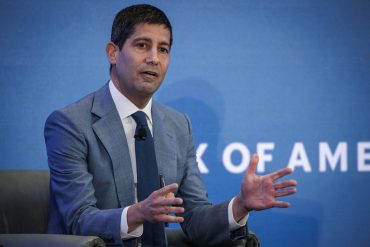
Warsh’s trajectory through finance, government, and academia has equipped him with a perspective that blends market instincts with institutional knowledge. After graduating from Stanford in 1992 and Harvard Law in 1995, he joined Morgan Stanley’s mergers practice before moving to the White House in 2002 as a special assistant on economic policy. By 2006, at 35, he became the youngest Federal Reserve governor in history.
His tenure coincided with the financial system’s near collapse. As the Fed’s primary contact with Wall Street and the Treasury, he helped coordinate emergency interventions that stabilized markets. During that period, he emerged as a voice favoring preemptive vigilance on inflation even as deflationary risks dominated headlines. This instinct, which some viewed as premature at the time, has gained relevance as central banks globally confronted post-pandemic price pressures.
Since leaving the Fed in 2011, Warsh has maintained influence through multiple channels. As a distinguished visiting fellow at Stanford’s Hoover Institution and a lecturer at the Graduate School of Business, he has shaped academic discourse on monetary frameworks. His 2012 report for the Bank of England on policy reform influenced Parliament’s approach to central bank governance. Corporate board roles at UPS and Coupang, alongside advisory work at Duquesne Family Office, keep him connected to real economy dynamics and capital allocation decisions.
Policy Framework
Warsh’s recent writings and speeches reveal a framework centered on what he describes as the Fed’s return to core functions. In a November 2025 Wall Street Journal piece, he criticized the central bank’s expanded balance sheet and what he characterizes as drift beyond its primary mandate. His argument rests on a straightforward premise: inflation reflects choices about money supply rather than inevitable consequences of growth.
This perspective translates into advocacy for aggressive quantitative tightening. He contends that shrinking the Fed’s holdings would free resources for private credit allocation while restoring clarity to monetary signals. The current balance sheet, expanded through successive rounds of asset purchases, represents in his view a source of market distortion that complicates price discovery and resource allocation.
Yet this emphasis on balance sheet reduction coexists with pragmatism on interest rates. In an October 2025 statement, Warsh indicated support for “lowering interest rates a lot” to support productivity gains. An April 2025 lecture at the International Monetary Fund expanded this theme, arguing that central banks rely too heavily on econometric models rather than market indicators like bond yields. His synthesis suggests a Fed that would pursue structural tightening through asset sales while maintaining flexibility on the policy rate.
Market Response
Financial markets reacted to reports of Warsh’s expected nomination with stocks and Treasuries falling as investors positioned for a more hawkish policy stance. Gold declined 2.8% and the dollar strengthened. S&P 500 futures slid 0.6% to 0.9% in early Friday trading, while Nasdaq 100 futures fell 0.7% to 1.2%. The 30-year Treasury yield led gains, rising five basis points. The dollar gained against all major peers, while 10-year Treasury yields climbed three basis points.
Bitcoin retreated toward $81,000 as traders assessed implications of Warsh’s opposition to quantitative easing for assets that historically benefited from balance sheet expansion. Prediction markets on Polymarket showed Warsh’s odds rising above 80% to 85% on Friday morning in Asia, with support fading for BlackRock’s Rick Rieder. Federal funds futures showed little change in the amount of easing priced through 2026 compared to Thursday’s close, suggesting markets maintained expectations for two quarter-point cuts this year.
These moves reflect investor assessment that Warsh represents continuity with orthodox central banking principles. The market response underscores expectations for accelerated balance sheet reduction even as rate policy remains data-dependent.
Economic Context
The nomination unfolds against a backdrop of contradictory signals. GDP growth has accelerated, with third-quarter 2025 expansion at 4.4% annualized and fourth-quarter estimates exceeding 5%. Consumer spending remains robust, supported by fiscal stimulus and steady employment. Job creation, however, has moderated to roughly 17,000 monthly additions since April, partly reflecting immigration policy changes that have constrained labor supply.
Inflation’s persistence above target stems partly from tariff policy. The effective tariff rate reached 11.7% by early 2026, adding upward pressure on goods prices. Warsh has indicated that he views artificial intelligence as a disinflationary force through productivity enhancement, a perspective that could inform his assessment of near-term price pressures if accompanied by evidence of structural improvement.
Senate Confirmation
Hearings will likely probe Warsh’s views on Fed independence and his approach to balancing the dual mandate of price stability and maximum employment. His record suggests commitment to price stability as a primary objective, and senators may explore how he would navigate complex scenarios where inflation and growth objectives diverge. Questions about tariffs’ impact on prices seem certain, as does scrutiny of his corporate board service and potential conflicts.
Market participants expect Senate approval, given his prior confirmation experience and demonstrated expertise during the financial crisis. If confirmed, consensus forecasts suggest two rate cuts in 2026 alongside accelerated balance sheet reduction, a combination that would test his ability to communicate a coherent policy path.
Outlook
Warsh’s potential chairmanship would mark a philosophical shift toward emphasizing the Fed’s balance sheet as a policy instrument distinct from the overnight rate. This approach carries implications in an environment where tariffs affect supply chains and fiscal policy remains expansive. Tighter quantitative conditions could influence credit availability even as lower rates aim to support borrowing.
For institutional investors, the nomination offers clarity on policy direction while introducing questions about implementation. A Fed focused on balance sheet discipline may prove less responsive to short-term growth fluctuations, demanding adjustments to portfolio construction and risk management. For the broader economy, it represents a test of whether conventional central banking tools can effectively address contemporary challenges.
The coming months will reveal whether Warsh’s framework can deliver on its stated objectives: restoring traditional monetary policy approaches while supporting an economy navigating significant structural transitions. His nomination suggests that the conversation about the Fed’s role has shifted from crisis management back to foundational principles of central banking.