
- AI Infrastructure
- Quantum Computing
- Semiconductors
IBM and Cisco Launch Distributed Quantum Computing Strategy
9 minute read
IBM and Cisco partner to build distributed quantum networks, linking processors through photonic entanglement and redefining how quantum systems scale toward commercial use.
Key Takeaways
-
IBM and Cisco are betting on distributed quantum networks, combining superconducting processors with photonic entanglement hardware to scale quantum systems beyond single-machine limits.
-
The partnership creates a dual-layer architecture—short-range couplers and long-range optical transducers—positioning connectivity, not processor count, as the central competitive moat.
-
Early-2030s deployment targets align with quantum commercialization timelines, giving both companies strategic optionality as global rivals pursue competing approaches to fault tolerance and scalability.
Introduction
Cisco Systems and IBM have entered a partnership that extends beyond conventional technology alliances into territory where speculation meets serious capital allocation. Announced on November 20, 2025, the collaboration aims to construct networks of interconnected quantum computers, transforming isolated processors into distributed systems capable of unprecedented computational scale.
The arrangement pairs IBM’s quantum hardware expertise with Cisco’s networking infrastructure, targeting operational deployment by the early 2030s. For investors and strategists watching quantum computing’s transition from laboratory curiosity to commercial instrument, this deal represents a structural thesis about how the technology will ultimately scale.
Architecture Over Hardware
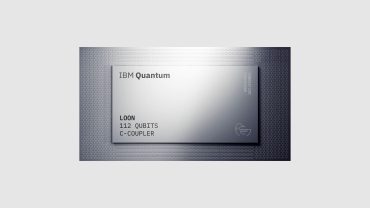
The partnership’s significance lies not in quantum processing power itself but in the conviction that connectivity will determine competitive advantage. IBM has pursued quantum computing with methodical aggression, its roadmap calling for fault-tolerant machines executing one billion operations across 2,000 qubits by 2033. The company’s November 12 release of its Loon and Nighthawk chips demonstrated advances in computational complexity and gate fidelity. Yet physical constraints impose hard limits on isolated systems. Cryogenic environments, error accumulation, and the sheer difficulty of maintaining quantum states at scale create bottlenecks that cannot be solved through hardware refinement alone.
Cisco’s contribution addresses this constraint directly. In May 2025, the networking giant unveiled a quantum entanglement chip—a photonic integrated circuit operating at room temperature that generates entangled photon pairs at rates reaching 200 million per second. This enables quantum teleportation over existing fiber optic infrastructure, a practical requirement for any distributed architecture. By linking quantum processors through quantum networking units, the partnership seeks to create clusters where geographically separated machines function as unified computational entities. IBM provides the processors; Cisco supplies the connective tissue.
The technical approach involves two distinct networking layers. Short-range couplers will handle intra-datacenter connections, while long-range transducers convert microwave photons to optical wavelengths for kilometer-scale links. Cisco has developed entanglement distribution protocols and a distributed quantum computing compiler designed for vendor-agnostic interoperability. This positions the collaboration as infrastructure play rather than proprietary platform, analogous to the internet protocols that commoditized classical computing infrastructure decades ago.
Commercial Timeline and Market Context
The partnership follows a staged implementation plan. A proof-of-concept demonstration entangling cryogenically separated processors is targeted within five years, with full network operability arriving early next decade. This timeline aligns with IBM’s broader milestones, including an anticipated quantum advantage demonstration in 2026 where quantum circuits outperform classical supercomputers on specific tasks. Cisco’s September 2025 release of prototype software for real-time quantum network management accelerates the integration path, enabling classical applications in secure communications and precision time synchronization alongside quantum workloads.
Market projections justify the extended development horizon. Quantum computing valuations are forecast to grow from $3.52 billion in 2025 to $20.20 billion by 2030, representing a 41.8 percent compound annual growth rate. Alternative analyses project $7.3 billion by 2030 at a 34.6 percent CAGR. These ranges reflect genuine uncertainty about commercialization speed, but the directional momentum is consistent across forecasts. IBM has assembled over 250 partnerships and provides cloud access to 500,000 users, establishing distribution channels that will matter as quantum transitions from research tool to production infrastructure.
For Cisco, the partnership represents strategic diversification as core routing revenues decelerate. The company’s quantum initiatives, including its Santa Monica laboratories and collaboration with UC Santa Barbara, signal a calculated pivot toward emerging infrastructure categories. IBM’s motivation is equally clear: distributed architecture could differentiate its quantum offering in a crowded field that includes Google’s Sycamore processor, Microsoft’s topological qubit research, and commercial efforts from IonQ and Rigetti. Where competitors emphasize hardware performance, IBM and Cisco are positioning connectivity as the defining competitive moat.
Financial Implications
Investor response on announcement day was positive but measured. IBM shares closed at $295.70, up 1.36 percent on the New York Stock Exchange. Cisco gained 0.51 percent, closing at $79.225 on NASDAQ. Premarket trading showed stronger initial enthusiasm, with IBM up 1.6 percent and Cisco 0.9 percent. The modest final gains reflect rational discounting: commercial returns remain years distant, and quantum computing’s contribution to current valuations is limited despite meaningful long-term optionality.
Neither company filed an SEC Form 8-K, indicating the partnership falls below materiality thresholds requiring immediate disclosure. This administrative detail matters. It confirms the deal’s current status as developmental rather than revenue-generating, though future filings will likely accompany prototype deployments and commercial contracts. For institutional investors, the arrangement provides quantum exposure without demanding near-term earnings adjustments, an attractive risk profile given technology’s speculative phase.
The financial calculus extends beyond direct revenues. Quantum capabilities factor into IBM’s market capitalization as strategic optionality, while Cisco gains positioning in next-generation infrastructure markets. As quantum computing approaches practical utility, first-mover advantages in networking standards and interoperability protocols could prove substantial. The partnership’s emphasis on vendor-agnostic systems suggests ambitions beyond bilateral collaboration toward industry-wide platform status.

Industrial Applications
Distributed quantum networks unlock use cases unattainable with isolated processors. Pharmaceutical companies could simulate molecular interactions at scales that accelerate drug discovery. Financial institutions might deploy optimization algorithms that transform portfolio construction and risk management. These applications require computational power that distributed architectures promise to deliver, assuming error correction and system stability can be achieved across networked quantum states.
Challenges remain formidable. Error correction grows exponentially complex in entangled systems. Energy demands for cryogenic links pose operational questions. Standardization across vendors requires coordination that may prove elusive as competitive dynamics intensify. Google Quantum AI, Microsoft Azure Quantum, and emerging players are advancing modular architectures with different technical approaches. IBM and Cisco’s networking focus could confer advantage, but hardware improvements from competitors might render distributed systems unnecessary if single-processor capabilities advance faster than anticipated.
The partnership benefits from timing. U.S. National Quantum Initiative funding supports ecosystem development, while workforce projections estimate 250,000 quantum-related positions by 2030. Economic impact studies suggest cumulative value creation approaching $1 trillion through 2035. These figures carry uncertainty, but directional trends support infrastructure investment. Cisco’s integration of post-quantum cryptography standards addresses immediate cybersecurity concerns, providing near-term revenue while longer-term quantum applications mature.
Strategic Assessment
The IBM-Cisco partnership represents a structural bet on quantum computing’s evolution. Where competitors pursue vertical integration and proprietary advantage, this collaboration prioritizes horizontal interoperability and network effects. The strategy mirrors classical computing’s trajectory, where open protocols and distributed architecture enabled exponential scaling that proprietary systems could not match.
Execution risk remains substantial. Technical hurdles around error correction, energy efficiency, and system stability could delay commercialization or increase costs beyond economic viability. Regulatory frameworks for quantum technology are emerging, with export controls and security considerations introducing policy uncertainty. Market adoption depends on demonstrating quantum advantage across applications where classical alternatives remain cheaper and more reliable.
Yet the partnership’s architecture possesses strategic logic. By focusing on connectivity rather than hardware supremacy, IBM and Cisco position themselves as infrastructure providers in whatever quantum ecosystem emerges. This approach reduces winner-take-all dynamics and creates multiple revenue pathways: selling processors, networking equipment, software platforms, and integration services.
For institutional investors and corporate strategists, the collaboration offers exposure to quantum computing’s potential without requiring precise predictions about technical trajectories. The extended timeline provides optionality while limiting near-term capital requirements. As quantum computing transitions from research to commerce, distributed architectures may prove either essential infrastructure or expensive detour. IBM and Cisco are betting on the former, and the partnership’s structure ensures they remain relevant regardless of which specific technical approach ultimately prevails.
The quantum era’s defining architecture may well emerge from this alliance. In markets characterized by probabilistic outcomes, connectivity offers a deterministic foundation.


