- Consumer Electronics
- Device Ecosystems
- MWC 2026
Five Launches That Defined Intelligent Hardware at MWC 2026
12 minute read
MWC Barcelona 2026 revealed not just new devices, but a coherent new logic: intelligence distributed, embodied, and increasingly inseparable from daily life.
Key Takeaways
- Samsung’s Galaxy S26 series marks a decisive shift from reactive AI features to proactive, agentic behaviour, positioning the smartphone as the orchestrating centre of a cross-device ecosystem rather than a standalone product.
- Xiaomi’s Vision Gran Turismo and Honor’s Robot Phone concept signal that hardware differentiation is moving beyond the screen, with AIoT platforms and embodied interaction emerging as the next competitive frontier for Chinese OEMs.
- Vivo’s professional imaging accessories and Lenovo’s modular PC concepts reflect a maturing understanding that AI hardware must adapt to evolving workloads, with upgradability and specialisation replacing the annual replacement cycle as the dominant value proposition.
The Show Floor as Strategic Register
Mobile World Congress has always been as much about positioning as product. What companies choose to place on the floor of Fira Gran Via, and how they frame it, offers a more reliable guide to strategic intent than any earnings call. MWC 2026, convened under the GSMA’s “IQ Era” theme, was notable for the coherence of the signal. Across five significant launches from five distinct companies, a shared logic emerged: the value in hardware is no longer in the device itself but in what the device knows, anticipates, and coordinates.
GSMA Director General Vivek Badrinath set the tone on opening day, framing the week around three obligations: completing 5G, confronting AI as an operational imperative, and defending networks against digital fraud. The device makers on the floor had arrived at similar conclusions through different routes. What follows is an examination of five launches that, taken together, sketch the competitive architecture of the years ahead.
Samsung: The Phone as Orchestrator
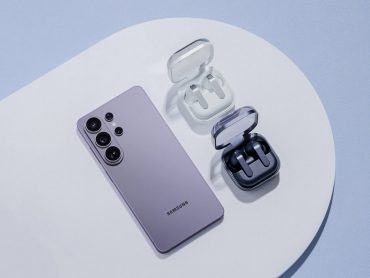
Samsung’s presentation of the Galaxy S26 series at MWC was less a product launch than a thesis statement. The hardware credentials of the S26 Ultra are substantial: a custom Snapdragon 8 Elite Gen 5 chipset, a redesigned vapour chamber for sustained performance, and a camera system that delivers the brightest low-light results in Galaxy history. But Samsung’s leadership made clear, with unusual directness, that hardware is the vehicle rather than the destination.
The features that define this generation are behavioural. Now Nudge surfaces contextually relevant suggestions without being prompted; Now Brief distils schedule and context into a personalised digest. Users can designate Bixby, Gemini, or Perplexity as their primary agent, coordinating actions across applications in natural language. An industry-first built-in Privacy Display gives granular control over screen visibility in shared environments. These are not incremental additions to an existing paradigm. They represent a considered attempt to make the phone the orchestrating intelligence of a connected life, one that acts on behalf of its user rather than waiting for instruction.
TM Roh, Samsung’s CEO and Head of Device eXperience, framed the MWC showcase as an opportunity to demonstrate not just where Galaxy AI stands today but where it is heading. The strategic intent is visible in the ecosystem breadth: Galaxy Buds4, Tab S11, Watch8, and forward-looking concepts including Galaxy XR and TriFold all draw on the same AI layer. Satellite connectivity, expanding through partnerships with Verizon, T-Mobile, Virgin Media O2, and KDDI, extends the platform’s reach into scenarios where terrestrial networks cannot follow. Samsung is building a loyalty architecture designed to make switching costly, not through lock-in but through genuine accumulation of value over time.

Xiaomi: Intelligence at Speed
Xiaomi made perhaps the most audacious statement of the week, placing a full-scale physical hypercar at the centre of its stand. The Vision Gran Turismo, developed in collaboration with Polyphony Digital for Gran Turismo 7, marks the first time a technology company has entered that programme. It is, on one level, a spectacular piece of brand theatre. On another, it is a precise articulation of where Xiaomi’s platform strategy is heading.
HyperOS, already connecting Xiaomi smartphones, tablets, wearables, and scooters, now extends to the vehicle. The implications are concrete: a phone that knows a user’s calendar can precondition the cabin; route planning can incorporate home energy data; in-car experiences can synchronise with wearable health metrics. The Vision Gran Turismo is not production-intent, but its presence alongside the SU7 Ultra signals that Xiaomi views the automobile as the ultimate scale test for its AIoT platform, the environment in which the value of seamless cross-device intelligence is most viscerally demonstrated.
The move carries competitive logic that extends beyond automotive. In a market where memory pricing is squeezing margins across the industry, Xiaomi is using halo hardware to deepen consumer attachment to an ecosystem that spans a widening range of categories. The car is both brand statement and commercial anchor. Analysts covering Xiaomi’s Hong Kong and mainland listings have noted renewed attention to cross-category synergies. For capital allocators, the question is no longer whether Xiaomi can compete in premium handsets, but how far its platform economics can stretch.
Honor: The Case for Embodied Intelligence
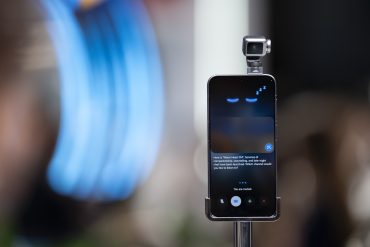
Honor’s MWC presentation was the most forward-looking of the week, and deliberately so. The Magic V6 foldable makes a credible claim to category-leading thinness at 8.75 mm folded, powered by a Snapdragon 8 Elite Gen 5 chipset and a fifth-generation silicon-carbon battery delivering 6,660 mAh capacity with improved energy density. These are strong specifications for a demanding form factor. But the device that commanded most attention was the Robot Phone concept, shown in working form for the first time.
A 200 MP sensor sits atop an ultra-compact four-degree-of-freedom robotic gimbal, the industry’s smallest micro-motor system, capable of tracking subjects, responding to interaction with physical gesture, and synchronising movement to music. The effect is less novelty than provocation: Honor is asking what happens when a device develops a physical vocabulary, when it can nod, orient, and respond in ways that go beyond the screen. A companion humanoid robot demonstration at the stand extended the argument toward physical assistance in workplace and commercial environments.
CEO James Li tied these reveals to the company’s ALPHA PLAN, encompassing the Alpha Phone, Alpha Store, and Alpha Lab. The thesis running through it is that future differentiation will favour devices that do not merely respond to instruction but anticipate need and engage in physical space. It is a long-range bet, but Honor has established a pattern of competing through innovation rather than volume, and the Robot Phone concept is a credible early expression of where that approach leads.
Vivo: Professionalising the Lens
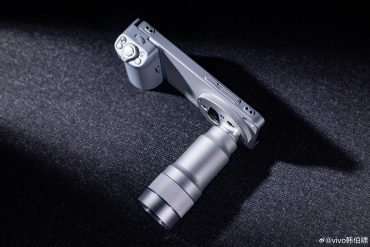
Vivo’s global preview of the X300 Ultra addressed a narrower but commercially significant question: how far can mobile imaging travel toward professional capability, and what form does that journey take? The answer, at MWC 2026, is accessory-driven. The X300 Ultra features a 200 MP primary sensor, but the more telling elements are the additions: a detachable telephoto extender reaching approximately 400 mm equivalent with up to 17× optical zoom developed in collaboration with ZEISS, and a pro-grade Camera Cage equipped with grips, tripod mount, and attachment points for lights and microphones.
The strategy is to move the conversation away from raw specification and toward professional utility. A device with this accessory architecture is not competing for the consumer who wants good photos; it is competing for the working creator who needs a capable, portable imaging rig on location. Vivo has confirmed global availability following its China launch, a departure from its traditionally regional approach that signals broader commercial ambition.
The launch reinforces a trend visible across MWC’s device floor: imaging has become the primary arena for premium differentiation. In an environment where chipset performance is converging and memory pricing is applying uniform pressure across manufacturers, the ability to offer a credible professional tool is one of the few remaining vectors for meaningful price separation.
Lenovo: Preparing for Fluid Workloads
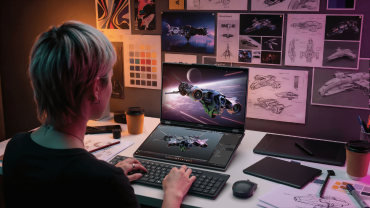
Lenovo’s contribution to the week’s device narrative was quieter in tone but pointed in implication. The ThinkBook modular AI PC adopts a component-swappable architecture, allowing users to upgrade processing and memory independently rather than replacing the entire device. The Legion Go fold concept pairs a Windows gaming handheld with a screen that folds to half its size, addressing the tension between portability and display real estate that has constrained the handheld gaming category.
Neither product is aimed at mass-market adoption today. Both reflect a considered reading of where enterprise and creator demand is heading. AI workloads are not static; the compute requirements for inference and generation are evolving quickly enough that a device purchased today may be inadequate within two years. Modularity is Lenovo’s answer to that problem, offering a path to hardware longevity that aligns with both sustainability commitments and procurement cost management. For enterprise buyers facing rapid AI hardware cycles, the argument is pragmatic and well-timed.
The Architecture of What Comes Next
What links these five launches is not a shared feature or a common technology, but a shared understanding of where competitive advantage is migrating. Samsung deepens its ecosystem moat; Xiaomi stretches intelligence onto the road; Honor experiments with physical interaction; Vivo professionalises the imaging layer; Lenovo modularises the workspace. Each is a distinct response to the same underlying shift: the device market is moving from a competition over specifications to a competition over contexts.
For senior executives and capital allocators, the implication is worth sitting with. The companies that will define the premium tier in the latter half of this decade are those that can demonstrate continuous, contextually aware value across a user’s day, across form factors, and across the boundaries between work, mobility, and home. That capability is not built in a single product cycle. It accumulates over years of platform investment, partnership, and architectural discipline. The five companies that made their cases most clearly in Barcelona this week have already started building it.