Ahead of Consensus.
Intelligence across tech and capital markets, for investors, policymakers, and business leaders.
11 minute read
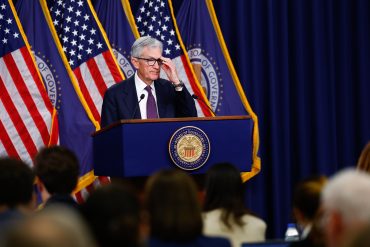
There is a particular discipline to doing nothing at the right moment. When the Federal Open Market Committee left the federal funds rate unchanged at 3½ to 3¾ percent on March 18, 2026, it made a decision that was, on the surface, entirely expected. Beneath that surface, however, the choice was freighted with consequence. An 11-to-1 vote, a lone dissent from Governor Stephen Miran in favor of a quarter-point cut, an inflation forecast revised upward, and a geopolitical cloud that no economic model can reliably quantify: the meeting was, by any serious measure, more complex than the outcome suggested.
The Fed enters this holding pattern having already moved. Three quarter-point reductions in the closing months of 2025 brought the benchmark rate down from its prior highs, easing financial conditions for businesses and households without, in the Committee’s judgment, reigniting the price pressures that had defined the earlier part of the decade. January’s meeting produced no change. March confirmed the pause. The question now is not whether the Fed has the will to act, but whether the conditions that would justify action are approaching or receding.
The most consequential revision in this cycle came not on growth but on prices. The median projection for headline PCE inflation in 2026 was lifted three-tenths of a percentage point to 2.7 percent, with core PCE also revised higher. That adjustment, modest in absolute terms, carries significant signaling weight. It tells markets that the Committee has incorporated the energy shock from Middle East developments into its central scenario, without abandoning the expectation that the effect will eventually fade.
Oil prices have risen sharply in recent weeks, driven by conflict involving Iran and the attendant uncertainty over supply routes and regional stability. The pass-through from energy to headline inflation is well-documented; what remains uncertain is the duration and breadth of any second-round effects. Wages, transport costs, and business input prices can all absorb energy shocks in ways that prove stickier than the initial impulse. The Fed is watching all of these channels carefully, and the upward revision to inflation forecasts reflects an honest acknowledgment that the near-term path is bumpier than it appeared in December.
Yet the projections still embed a return to 2.2 percent inflation by 2027 and to the 2 percent objective thereafter. That is not wishful thinking so much as a considered baseline: energy-driven inflation, historically, does moderate as supply disruptions resolve or demand adjusts. The risk is that this episode proves more persistent, either because the geopolitical situation does not stabilize or because domestic demand remains strong enough to sustain broader price pressures. Neither outcome is the Fed’s central case, but both are live enough to keep policymakers from easing prematurely.
Against the inflation picture, the growth projections offered modest encouragement. The median expectation for real GDP growth in 2026 was lifted to 2.4 percent, with slightly firmer readings projected for 2027 and 2028. The longer-run growth estimate edged up to 2.0 percent. These are not dramatic revisions, but they matter: an economy growing at 2.4 percent while absorbing an energy shock is demonstrating a degree of underlying resilience that should not be dismissed.
The labor market, however, tells a more ambivalent story. Job gains have cooled noticeably, and unemployment is projected to hold near 4.4 percent through 2026 before declining modestly. It is precisely this softening that motivated Governor Miran’s dissent, and it is not without force. When hiring slows, the distributional consequences fall disproportionately on workers at the margin: those entering the labor force, those transitioning between sectors, those with the least bargaining power. The majority’s decision to hold reflects a judgment that the economy’s productive capacity remains intact and that easing now, with inflation still elevated and geopolitical risk unresolved, would risk credibility without delivering commensurate benefit.
The market reaction was, in the truest sense, proportionate. Equities posted modest declines: the S&P 500 and Nasdaq each fell in the range of 0.7 to 0.9 percent, the Dow shed roughly 1 percent. Treasury yields edged higher, with the 10-year note rising a few basis points as investors recalibrated to a slightly stickier inflation path. The dollar strengthened fractionally. None of this constitutes distress; it is the normal adjustment of expectations when a central bank confirms what was already largely priced in, while simultaneously signaling that the path to further easing is conditional rather than certain.
The median dot for 2026 still implies approximately one additional quarter-point reduction before year-end, bringing the funds rate to around 3.4 percent. That is a meaningful signal of direction without constituting a commitment. The Fed’s data-dependent posture, which Chair Jerome Powell articulated carefully in his post-meeting remarks, means that both a cut and an extended hold remain plausible depending on how the next several months unfold.
What this decision ultimately reflects is a sophisticated approach to risk management under uncertainty. The Fed enters this period with advantages it did not possess in earlier supply-shock episodes: a policy rate well above zero, inflation expectations that have not unanchored, and a labor market that had already begun to normalize before the external shock arrived. These starting conditions afford the Committee a degree of flexibility that its predecessors, operating with rates near zero in 2021 and 2022, did not have.
The challenge, as always, is timing. Moving too soon risks embedding higher inflation expectations into wage negotiations, financial contracts, and business planning. Moving too late risks compounding the slowdown in hiring into something more serious, particularly if the geopolitical situation deteriorates further and consumer confidence erodes. The Committee’s emphasis on monitoring “financial and international developments” alongside domestic data reflects an awareness that the relevant variables extend well beyond the domestic economy.
For senior investors and corporate decision-makers, the practical implications are clear. Borrowing costs remain elevated relative to the levels of the prior decade, and they are unlikely to fall quickly. Capital allocation decisions, whether in private equity, real estate, or corporate debt, should be stress-tested against a scenario in which the rate environment remains in its current corridor through much of 2026. Consumer demand, meanwhile, has proved more durable than many expected, but it is not immune to the cumulative effects of sustained financial pressure and rising energy costs.
There is a broader argument, often underappreciated in the immediate aftermath of any given decision, for the value of a central bank that behaves consistently and explains itself clearly. The Federal Reserve’s ability to hold rates steady without triggering a market dislocation, to revise its inflation forecasts upward without surrendering its longer-run credibility, and to acknowledge geopolitical uncertainty without abandoning its analytical framework: these are not small achievements. They are the product of institutional capital built over decades and reinforced by the discipline of the post-2021 tightening cycle.
The road ahead remains uncertain. The Middle East situation may stabilize, allowing energy prices to retreat and inflation to resume its downward path. It may not. Domestic demand may soften further, tilting the balance toward accommodation. Or the economy may continue to expand at a pace that keeps the pressure on prices and justifies continued patience. In any of these scenarios, the Federal Reserve’s March decision will be judged not by whether it was bold, but by whether it was right. On the evidence available, it was exactly what the moment required.