- Biotech
- Healthcare
- Pharmaceuticals
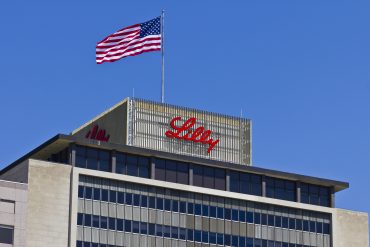
Eli Lilly Becomes First Pharmaceutical Company to Reach $1 Trillion Valuation
7 minute read
The pharmaceutical company achieves the historic market cap milestone driven by blockbuster GLP-1 drugs generating nearly 25 billion dollars in revenue.
Key Takeaways
- Eli Lilly reaches $1 trillion valuation on November 21st, 2025, becoming the first pharmaceutical company and second non-tech firm to achieve this milestone, driven by blockbuster GLP-1 drugs Mounjaro and Zepbound.
- GLP-1 drugs generate nearly $25 billion in nine months of 2025, representing more than half of Lilly’s total revenues and surpassing Merck’s Keytruda as the world’s top-selling drug.
- Global weight-loss drug market projected at $150 billion by 2030 as Lilly invests in next-generation oral and injectable medications while pursuing strategic acquisitions including $2.5 billion for Scorpion Therapeutics and $1.3 billion for Verve Therapeutics.
The Breach
On November 21, 2025, Eli Lilly became the first pharmaceutical company to cross $1 trillion in market capitalization, joining an exclusive cohort of American corporations where technology firms have traditionally reigned unchallenged. Only Berkshire Hathaway had previously managed to infiltrate this territory from outside the digital sphere. The Indianapolis-based drugmaker’s shares closed at $1,059.70 that day, capping a 75% surge since January and forcing a fundamental reassessment of how capital markets price pharmaceutical innovation.
This is not merely a story of corporate success. Lilly’s ascent reflects a structural shift in how investors evaluate therapeutic value, particularly when scientific breakthrough collides with demographic necessity. The company has achieved something rare in modern pharmaceuticals: it has created products that function less like traditional medicines and more like infrastructure for managing chronic conditions that affect hundreds of millions globally. In doing so, it has demonstrated that drug companies can command valuations comparable to platform technologies when they solve problems at sufficient scale.
The Architecture of Dominance
Tirzepatide, marketed as Mounjaro for diabetes and Zepbound for obesity, generated over $10 billion in combined sales during the third quarter alone. For the first nine months of 2025, these twin products contributed approximately $19 billion of Lilly’s estimated $35 billion in total revenue, representing 54% of the company’s business. To contextualize this performance: Mounjaro and Zepbound together now outpace Merck’s Keytruda, the immunotherapy that has held the title of world’s best-selling drug with $23.3 billion in sales through September.
The numbers tell only part of the story. What distinguishes tirzepatide is its clinical profile. Patients lose an average of 20% of body weight, while those with diabetes see hemoglobin A1C reductions of 2.3 percentage points. These outcomes have translated into market dominance: Mounjaro captures 60% of new prescriptions among incretin-based diabetes therapies, while Zepbound holds 75% of the obesity treatment segment. At roughly $1,000 per month before insurance rebates, the drugs command premium pricing justified by demonstrated efficacy.
Geographic expansion has accelerated momentum beyond initial U.S. adoption. Mounjaro entered Japan and the European Union in late 2024, while Zepbound launched in China and Brazil this year. This international rollout has diversified revenue exposure precisely as manufacturing capacity has caught up with demand. The $3 billion production facility announced with third-quarter results represents the latest in a series of investments designed to eliminate supply constraints that previously throttled growth.
Competitive Positioning
Lilly’s trillion-dollar valuation now approximates the combined market capitalizations of six major pharmaceutical peers: Merck at $140 billion, Pfizer at $160 billion, Sanofi at $130 billion, GSK at $100 billion, Novo Nordisk at $500 billion, and Bristol Myers Squibb at $70 billion. This concentration reveals how winner-take-most dynamics, historically associated with technology platforms, have migrated into therapeutics. Scale advantages in manufacturing, combined with robust patent protection extending through 2036 for Mounjaro, create barriers that competitors struggle to overcome quickly.
The comparison with Novo Nordisk proves instructive. The Danish pharmaceutical company pioneered this category with semaglutide, marketed as Ozempic and Wegovy, yet trades at half Lilly’s valuation. Tirzepatide’s dual mechanism as both GLP-1 and GIP receptor agonist delivers superior weight loss compared to semaglutide’s single-pathway approach. Clinical superiority, translated into market share gains, has enabled Lilly to capture the bulk of incremental value creation in this category despite arriving later.
Portfolio Depth and Risk Mitigation
While tirzepatide dominates headlines, Lilly maintains substantial revenue from established products that provide ballast against concentration risk. Verzenio, its breast cancer therapy, is projected to generate $4 billion annually. Taltz, a treatment for psoriasis, contributes an additional $3 billion. Newer launches including Omvoh for inflammatory bowel disease, which recorded $177 million in sales through September, along with Ebglyss, Jaypirca, and the recently approved Kisunla for Alzheimer’s disease, add diversification across therapeutic areas.
This portfolio stability matters because GLP-1 therapies face legitimate questions about long-term safety and tolerability. Approximately 30% of patients experience gastrointestinal side effects significant enough to influence adherence. Concerns about muscle loss during rapid weight reduction and potential rebound effects after discontinuation require ongoing surveillance. These clinical uncertainties introduce execution risk that diversified revenue streams help offset.
Pipeline Strategy
Lilly has structured its development pipeline to extend its metabolic franchise while hedging against eventual patent expiries and competitive erosion. Orforglipron, an oral GLP-1 small molecule, achieved Phase 3 success in August with regulatory filings planned before year end. Manufacturing capacity has already been installed in anticipation of approval, eliminating the supply shortages that constrained early tirzepatide uptake.
Retatrutide represents a more ambitious leap. This tri-agonist targeting GLP-1, GIP, and glucagon receptors produced 24% weight loss in Phase 2 trials, surpassing tirzepatide’s results. Late-stage trial data is expected imminently, with commercial launch targeted for 2027. Success would establish Lilly as the provider of both current standard-of-care and next-generation therapy, a positioning that compounds competitive advantages.
Mid-stage assets address complications that emerge from GLP-1 therapy itself. Bimagrumab preserves muscle mass during weight loss. Eloralintide modulates appetite through different pathways. Mazdutide offers an alternative dual-agonist approach. Collectively, these programs signal an intention to own the metabolic disease category comprehensively, extending indications into hypertension, sleep apnea, liver disease, and potentially neurodegenerative conditions. The recent approval for metabolic dysfunction-associated steatohepatitis opens another high-value indication where few effective therapies exist.
Strategic Acquisitions and Capability Building
Lilly has deployed over $4 billion in 2025 acquisitions designed to diversify beyond metabolic disease. The $2.5 billion purchase of Scorpion Therapeutics in January added precision oncology capabilities through mutant-selective PI3Kα inhibitors. June’s $1.3 billion acquisition of Verve Therapeutics brought in vivo gene editing technology for cardiovascular applications. October’s $262 million deal for Adverum Biotechnologies enhanced ophthalmology through gene therapies targeting wet age-related macular degeneration.
These transactions reflect pragmatic risk management. GLP-1 therapies will eventually face biosimilar competition, likely around 2030. Building positions in oncology, cardiovascular disease, and ophthalmology creates optionality should metabolic growth moderate. The deals also access novel modalities including gene editing and gene therapy, technologies that may define pharmaceutical innovation’s next chapter.
Structural Tailwinds
The obesity and diabetes therapeutic market is forecast to reach $150 billion globally by 2030. In the United States alone, the broader peptide therapeutics market is projected to expand from $103.66 billion in 2024 to $336.12 billion by 2033, representing compound annual growth of 12.77%. These projections rest on demographic fundamentals: obesity prevalence among U.S. adults is expected to reach 50% by 2030, while diabetes rates continue climbing in both developed and emerging markets.
Current penetration remains modest. Only 15% of eligible U.S. patients currently receive GLP-1 therapy, suggesting substantial room for expansion even within existing indications. As supply constraints ease and insurance coverage broadens, adoption should accelerate. International markets present larger opportunity still, though affordability challenges in middle-income countries will require differentiated pricing strategies.
Challenges and Sustainability Questions
Lilly’s valuation embeds optimistic assumptions about durability and market expansion that deserve scrutiny. Competition from Novo Nordisk continues intensifying, with amycretin showing promising oral bioavailability. Viking Therapeutics’ VK2735 has produced encouraging Phase 2 data. As more competitors enter, pricing pressure will inevitably materialize, compressing margins even as volumes grow.
Access and affordability present both ethical and commercial complications. High prices limit adoption in precisely those populations where obesity and diabetes prevalence runs highest. Policymakers increasingly question whether society can sustain widespread use of $12,000 annual therapies for what are essentially chronic, lifelong conditions. Medicare negotiations on drug pricing, while not immediately threatening Lilly’s newest products, establish precedent that could eventually constrain revenue growth.
The long-term clinical picture remains incomplete. GLP-1 therapies have existed for only 15 years, and the current high-efficacy variants for less than five. Questions about cardiovascular outcomes, cancer risk, and metabolic effects after decades of use cannot yet be answered definitively. Should unexpected safety signals emerge, the impact on both valuation and public health would be profound.
The New Pharmaceutical Paradigm
Eli Lilly’s achievement forces reconsideration of what pharmaceutical companies can become. For decades, the industry operated on a model of steady innovation yielding modest but reliable returns, occasionally punctuated by blockbusters that never quite threatened the technology sector’s valuation premiums. Lilly has demonstrated that when therapeutic innovation addresses problems of genuine scale with demonstrable efficacy, drug companies can generate returns and command valuations that rival digital platforms.
Whether this model proves replicable or represents an exceptional convergence of scientific advance and demographic urgency remains unclear. What is certain is that Lilly has established new reference points for pharmaceutical value creation, compelling investors, competitors, and policymakers to adjust their frameworks accordingly. The trillion-dollar threshold, once unimaginable for a traditional drugmaker, now appears less like a ceiling than a waypoint.


