- Aerospace Defense
- Earnings Season
- Industrial & Manufacturing
Boeing's Q4 Earnings Signal Recovery After Years of Crisis
9 minute read
The aerospace giant posted $23.9 billion in quarterly revenue, up 57%, while integrating Spirit AeroSystems and narrowing losses across divisions.
Key Takeaways
- Commercial Airplanes delivered 160 aircraft in Q4, a 181% increase, with 737 production stabilizing at 42 units monthly despite persistent quality investments.
- The $8.3 billion Spirit AeroSystems acquisition aims to eliminate supply chain vulnerabilities that contributed to over $20 billion in losses since 2019.
- Global Services generated a $9.6 billion divestiture gain, driving GAAP earnings of $10.23 per share and positive operating cash flow of $1.3 billion.
Financial Rebound Masks Underlying Pressures
Boeing closed 2025 with fourth-quarter revenue reaching $23.9 billion, a 57% surge from the previous year that brought annual sales to $89.5 billion. This represented the company’s strongest top line since 2018, propelled by a combination of accelerated aircraft deliveries, strategic asset sales, and improving operational cadence across its three primary segments. The headline figure marked a 34% annual growth rate, signaling progress after years defined by regulatory constraints, manufacturing missteps, and pandemic disruption.
Yet the surface numbers require careful interpretation. GAAP earnings per share landed at $10.23, a dramatic reversal from prior-year losses, though this result leaned heavily on a $9.6 billion gain from divesting portions of the Digital Aviation Solutions business. Strip away that one-time windfall, which inflated EPS by $11.83, and core non-GAAP earnings settled at $9.92. Operating cash flow turned positive at $1.3 billion after a $3.5 billion outflow a year earlier, while free cash flow registered $0.4 billion. These metrics suggest genuine momentum, but they also underscore how far Boeing remains from the structural profitability that characterized its pre-crisis operations.
Market response reflected this complexity. Shares declined 1.48% in pre-market trading to $248.43, a modest pullback that captured investor ambivalence. Options markets had priced in a 5.08% swing, above the four-quarter average of 4.1%, indicating heightened uncertainty around execution risks and the durability of recent gains. Wall Street had anticipated a narrower loss of $0.45 per share on $22.25 billion in revenue, meaning Boeing beat expectations on both measures. Still, the muted price action revealed persistent scrutiny over whether operational improvements can sustain themselves without extraordinary items bolstering the bottom line.
Commercial Aviation Finds Its Footing
The Commercial Airplanes division delivered the most visible evidence of recovery. Fourth-quarter revenue climbed 139% to $11.4 billion, driven by 160 aircraft deliveries that represented a 181% increase year over year. The 737 program alone accounted for 117 units, with production stabilizing at 42 per month following deliberate restrictions imposed by the Federal Aviation Administration in early 2024. Those limits, implemented after quality defects surfaced in manufacturing processes, forced a recalibration that rippled through suppliers and delayed the broader industry’s return to pre-pandemic output levels.
Despite higher volumes, the segment posted a $0.6 billion operating loss, an improvement from the $2.1 billion deficit recorded a year earlier but still indicative of margin pressures. Operating margins lingered at negative 5.6%, weighed down by ongoing investments in quality assurance protocols and the costs associated with ramping production while maintaining heightened scrutiny. The division faces a balancing act: accelerating output to capitalize on a robust order book while demonstrating to regulators and customers that past lapses have been systematically addressed.
The integration of Spirit AeroSystems, finalized in December through an $8.3 billion all-stock transaction, represents Boeing’s most consequential structural move in years. Spirit had supplied fuselages and aerostructures for the 737 and other programs, but its separation from Boeing in 2005 created vulnerabilities that materialized during recent crises. The Alaska Airlines door-plug incident in January 2024, which triggered fresh regulatory oversight, exposed how outsourcing critical components introduced quality inconsistencies that Boeing struggled to control at arm’s length.
By bringing Spirit back into the fold, Boeing aims to impose uniform manufacturing standards, streamline oversight, and reduce dependencies that amplified past disruptions. Analysts view this vertical consolidation as a direct response to systemic weaknesses, where cost efficiencies once gained through outsourcing proved illusory when measured against the $20 billion in cumulative losses incurred since 2019. The move carries risks, including integration execution and the absorption of Spirit’s own operational challenges, but it reflects a strategic acknowledgment that control over the full production chain has become non-negotiable.
Defense Stability Meets Development Headwinds
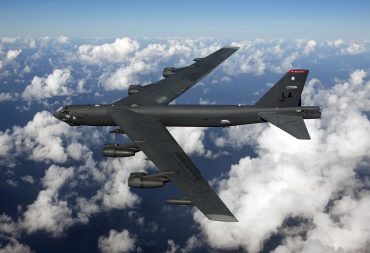
Defense, Space & Security generated $7.4 billion in fourth-quarter revenue, up 37%, with operating losses narrowing to $0.5 billion from $2.3 billion a year earlier. Margins improved to negative 6.8%, aided by contract awards covering 15 KC-46A tankers and 96 AH-64E Apache helicopters. The segment also achieved a significant milestone with the delivery of the first operational T-7A Red Hawk trainer to the U.S. Air Force, a platform designed to modernize military aviation training programs and position Boeing within the next generation of defense systems.
The T-7A rollout, delayed from original timelines by software integration complexities, exemplifies the challenges Boeing faces in fixed-price development contracts. These agreements lock in revenue but expose the company to cost overruns when technical hurdles extend schedules. A record $85 billion backlog, with 26% originating from international customers, demonstrates sustained demand driven by geopolitical tensions and defense modernization imperatives. As production volumes rise and development costs stabilize, margins should expand, but the near-term outlook remains constrained by legacy contract structures that continue to pressure profitability.
Services Shine Through Strategic Simplification
Global Services provided the quarter’s standout performance, with revenue edging up just 2% to $5.2 billion but operating earnings surging to $10.5 billion on the back of the Digital Aviation Solutions divestiture. This transaction, completed during the quarter, allowed Boeing to exit non-core software and analytics operations while concentrating resources on high-margin sustainment services that generate predictable, recurring revenue from existing fleets.
Annual orders reached a record $28 billion, supporting a $30 billion backlog that offers visibility into future cash generation. The services business has consistently buffered Boeing during commercial downturns, providing steady income streams even as aircraft deliveries fluctuated. This stability makes the segment strategically valuable, particularly as Boeing works to restore balance sheet strength. Liquidity stood at $29.4 billion in cash and marketable securities against $54.1 billion in debt, the latter elevated by financing related to the Spirit acquisition.

Path Forward Requires Sustained Execution
Boeing enters 2026 with a $682 billion backlog encompassing more than 6,100 commercial jets, reflecting robust order momentum. Fourth-quarter commercial net orders totaled 336 aircraft, including 105 737-10s for Alaska Airlines and 65 777-9s for Emirates. These commitments validate customer confidence in Boeing’s product lineup, though converting orders into profitable deliveries remains the critical test.
Production targets call for 787 Dreamliner output to reach eight per month, while 777X certification testing progresses toward a 2027 first delivery, delayed from earlier projections due to engine refinements. CEO Kelly Ortberg’s assertion that the company made “significant progress on our recovery in 2025” captures both achievement and caution. Supply chain integration following the Spirit deal, potential FAA audits, and macroeconomic pressures including inflation in raw materials and labor costs all present variables that could disrupt planned production ramps.
For policymakers and investors alike, Boeing’s trajectory illustrates the intricate relationship between national security considerations in defense contracting and competitive dynamics in commercial aviation, where the company secured more orders than Airbus for the first time since 2018. The results reveal an organization shedding past encumbrances through deliberate strategic actions, building a more integrated operational framework capable of withstanding external shocks. Full restoration demands consistent execution across multiple programs, but the fourth quarter offers tangible evidence that Boeing’s recalibration is yielding measurable progress toward long-term stability.