
- Capital Markets
- Public Policy
- US Treasury
BNY Mellon and Robinhood to Power Trump Accounts Program
12 minute read
Treasury names BNY Mellon financial agent and Robinhood brokerage partner to administer the landmark Trump Accounts savings program for American newborns.
Key Takeaways
- The US Treasury has designated BNY Mellon as financial agent for Trump Accounts, pairing institutional custody depth with Robinhood’s retail-first brokerage platform to serve millions of eligible American families.
- Over four million children have already been enrolled, with roughly one million families claiming the federal $1,000 seed contribution, signaling rapid early adoption ahead of the program’s full operational build-out.
- Corporate and philanthropic co-investors, including BlackRock, JPMorgan Chase, and Ray Dalio, are amplifying the federal seed with matching contributions, testing a hybrid public-private model that could shape future savings policy architecture.
An Institutional Bet on a National Savings Experiment
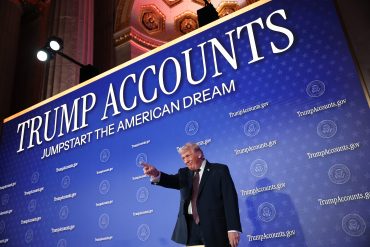
When the US Treasury announced on April 6 that BNY Mellon would serve as financial agent for its Trump Accounts program, it did more than assign a custodian. It made a structural declaration: that the most credible way to launch a national savings initiative at scale is to anchor it inside institutions already operating at that scale. The designation, paired with the selection of Robinhood Markets as brokerage and initial trustee, reflects a deliberate architectural choice, one that reveals as much about Washington’s current economic philosophy as it does about the competitive dynamics now reshaping American retail finance.
Trump Accounts were created under Section 70204 of the One Big Beautiful Bill Act, signed into law on July 4, 2025, and codified under new Internal Revenue Code Section 530A. The accounts function as a tax-advantaged savings vehicle, specifically a specialized form of individual retirement account, targeting US citizens born between January 1, 2025, and December 31, 2028. The federal government deposits a one-time $1,000 pilot contribution upon family opt-in. Funds are restricted to low-cost, non-leveraged instruments tracking broad US equity indices. Annual contributions are capped at $5,000, with employer contributions limited to $2,500. Withdrawals are barred until age 18, except for qualified rollovers.
Why BNY Mellon
BNY Mellon’s selection as financial agent is neither arbitrary nor merely honorific. As one of the world’s largest providers of asset servicing, securities custody, and trust administration, BNY manages trillions in assets under custody and carries a track record of handling complex, government-linked mandates. Its existing infrastructure already supports large-scale IRA and 529 programs, meaning the operational foundation required to absorb the first wave of Trump Accounts does not need to be constructed from scratch. In a program where execution failure at launch would carry immediate political and reputational consequences, institutional depth matters enormously.
BNY’s role extends beyond custody. The bank has been charged with supporting the development of a dedicated digital platform intended to simplify access for families who may have no prior experience with investment accounts. That is a substantive technical and operational brief, and it signals the Treasury’s expectation that BNY will not merely hold assets but actively build the infrastructure through which millions of Americans will engage with the program for the first time.
The bank was also among the earliest major financial institutions to announce it would match the government’s $1,000 contribution for eligible children of its US employees, a commitment that preceded and arguably helped position it for the financial agent designation. That sequence matters. It suggests the selection process rewarded demonstrated alignment with the program’s goals, not merely institutional size.
The Robinhood Dimension
Robinhood’s participation represents a different kind of institutional logic. Where BNY supplies regulatory credibility, operational depth, and custodial gravitas, Robinhood supplies speed, design, and a proven ability to convert non-investors into active market participants. Its commission-free model and mobile-first architecture have already introduced a generation of retail investors to equity markets. For a program explicitly aimed at families who may never have opened a brokerage account, that conversion capability is not incidental; it is central.
CEO Vladimir Tenev has consistently described the Trump Accounts partnership as an expression of Robinhood’s founding mission to democratize finance. That framing is strategically coherent. The program gives Robinhood a direct and formally sanctioned pathway to a vast new user cohort at the earliest possible point of financial engagement. The compounding implications of that customer relationship, across decades and account lifecycles, represent a long-duration growth vector that no amount of conventional retail marketing could replicate.
Robinhood also pledged to match the federal $1,000 contribution for eligible employees’ children, joining a coalition that includes Charles Schwab, BlackRock, JPMorgan Chase, and Bank of America. Philanthropic capital from Michael and Susan Dell and Ray Dalio has further supplemented the seed pool. The cumulative effect is a layered co-investment structure that tests the program’s operational plumbing with real money before broader national expansion.
Scale and Early Signals
The program’s initial uptake figures are notable. As of early April, the IRS reported more than four million children enrolled, with approximately one million families claiming the federal seed contribution. An online portal at trumpaccounts.gov serves as the primary entry point, and proposed Treasury and IRS regulations issued in March 2026 have clarified election procedures, trustee qualifications, and rollover mechanics. Nonbank trustees approved by the IRS as of December 31, 2025, receive automatic eligibility; others must apply. The guidance preserves family choice by anticipating trustee-to-trustee rollovers once accounts mature.
Those enrollment numbers, achieved in the program’s early months, suggest genuine public appetite. They also underscore the operational burden the BNY-Robinhood partnership must absorb. Managing four million accounts across a diverse population of families, many engaging with investment products for the first time, demands not only technical capacity but sustained educational and customer-service infrastructure. The accounts are simple by design; the delivery system supporting them is not.
Structural Questions
The concentration of initial trusteeship in two firms, however capable, raises legitimate questions about long-term market structure. A program that accumulates assets across millions of accounts over decades will eventually represent a significant pool of investable capital. Early incumbency in that ecosystem carries durable advantages, including data, relationships, and switching-cost insulation, that regulators and policymakers will need to monitor.
Treasury has signaled openness to additional trustees and the March regulations explicitly preserve future rollover flexibility. That language is important. It frames the BNY-Robinhood pairing as a launch architecture rather than a permanent duopoly, and it leaves room for competitive entry as the market matures. Whether that flexibility translates into genuine plurality of choice will depend on how aggressively the Treasury enforces it.
The Ownership Culture Thesis
The deeper argument animating Trump Accounts is not primarily financial; it is cultural. By seeding equity positions for an entire birth cohort and channeling funds into domestic indices, the program is an attempt to institutionalize a culture of ownership from birth. Proponents argue that generational disengagement from capital markets is partly a product of access barriers, and that removing those barriers early creates durable behavioral and financial change.
The compounding arithmetic is not trivial. A $1,000 seed, invested in broad US equities at historical average returns, could approach meaningful six-figure values by conventional retirement age, before any additional contributions. Employer matches and philanthropic supplements accelerate that trajectory for the families who engage most actively. Whether those projections survive real-world market conditions and behavioral patterns is an open question, but the logic of early, low-cost equity exposure is well-supported by financial research.
A Template Worth Watching
For institutional investors and policymakers, the Trump Accounts architecture offers a working model of how government initiatives can leverage private-sector capability without requiring the state to build parallel infrastructure. BNY provides custody and compliance; Robinhood provides execution and experience. The division of labor is clean, the incentives are reasonably aligned, and the operational risk is distributed across parties with strong independent reasons to perform.
That model, if it delivers, will be studied. Future savings vehicles, whether addressing retirement adequacy, healthcare, or education, face the same core challenge: how to achieve national scale without national bureaucracy. The BNY-Robinhood partnership is an early answer. Its success or failure over the next several years will tell policymakers more about the viability of hybrid public-private savings architecture than any amount of theoretical design. The stakes, measured in both dollars and economic mobility, are considerable.