
- AI Infrastructure
- Earnings Season
- Semiconductors
AMD Beats Q3 Estimates with 36% Growth but Margins Disappoint
8 minute read
Semiconductor giant reports 36% revenue growth to $9.25 billion in Q3 but shares decline as gross margin forecast signals persistent profitability pressures.
Key Takeaways
- AMD surpasses Q3 expectations with $9.25 billion revenue — a 36% year-over-year increase — and adjusted earnings per share of $1.20, beating Wall Street forecasts of $8.74 billion and $1.16 respectively.
- Margin guidance meets but doesn’t exceed estimates at 54.5% for Q4, prompting shares to slip in extended trading despite strong top-line growth, signaling competitive pricing pressures and rising operational costs.
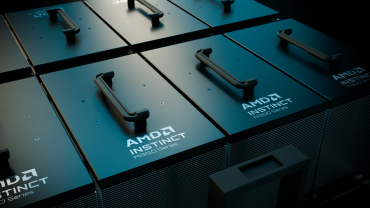
- Major AI partnerships expand market reach — OpenAI commits to deploying 6 gigawatts of AMD Instinct GPUs starting 2026, while Oracle plans a 50,000-chip deployment, positioning AMD against Nvidia in AI infrastructure.
Introduction
Advanced Micro Devices delivers record third-quarter financial results that exceed Wall Street expectations, yet shares retreat in after-hours trading as margin guidance fails to impress investors. The semiconductor manufacturer reports adjusted earnings per share of $1.20 on revenue of $9.25 billion, surpassing analyst estimates of $1.16 and $8.74 billion respectively. The mixed reaction underscores the delicate balance between growth momentum and profitability pressures in the highly competitive chip industry.
The results highlight AMD’s strengthening position in data center processors and AI accelerators while exposing ongoing challenges in maintaining profit margins amid escalating operational costs. For the fiscal quarter ending September 27, revenue climbs 36% year-over-year, driven by robust demand across enterprise computing and gaming segments. Net income reaches $1.24 billion, representing a substantial increase from $771 million in the prior-year period.
Key Developments
AMD’s fiscal third-quarter performance reflects strong execution across multiple product lines, with non-GAAP net income rising 31% to $2 billion. Diluted earnings per share on an adjusted basis hit $1.20, demonstrating operational leverage as the company scales its advanced semiconductor portfolio. The data center segment emerges as the primary growth driver, generating $4.34 billion in revenue and exceeding analyst projections of $4.13 billion.
The client computing division posts $2.75 billion in revenue, marking a 46% increase as Ryzen processors gain market share in consumer and commercial PC markets. Gaming revenue surges 181% to $1.30 billion, significantly outpacing the $1.05 billion consensus estimate. This dramatic expansion reflects strong demand for graphics processors used in console and PC gaming applications.
Operating expenses increase 30% year-over-year, raising questions about cost discipline as the company invests heavily in research and development. For the fourth quarter, AMD guides to approximately $9.6 billion in revenue, indicating 25% growth and surpassing the LSEG consensus of $9.15 billion. However, the company projects an adjusted gross margin of 54.5%, precisely matching analyst expectations rather than exceeding them.
Market Impact
AMD shares decline in extended trading despite the earnings beat, as investors focus on margin guidance that suggests profitability challenges persist. The stock has gained 107% year-to-date, significantly outpacing the Nasdaq’s 21% advance, reflecting high expectations for continued growth in AI and data center markets. This strong run-up amplifies sensitivity to any signals of slowing margin expansion.
The margin outlook indicates AMD faces intensifying competition from Nvidia in AI accelerators and ongoing pricing pressures across semiconductor markets. Investors interpret the guidance as evidence that revenue growth comes at the cost of profitability improvements. The market reaction demonstrates that meeting expectations no longer satisfies shareholders who have priced in consistent outperformance.
Amazon’s disclosure that it sold its entire 822,234-share AMD position as of September 30 adds to investor uncertainty. While the e-commerce giant’s divestment may reflect portfolio rebalancing rather than fundamental concerns, the timing coincides with questions about AMD’s ability to maintain premium valuations amid margin pressures.
Strategic Insights
AMD’s results underscore the company’s successful pivot toward high-growth markets including artificial intelligence, cloud computing, and enterprise infrastructure. The strategic emphasis on next-generation EPYC server processors and Instinct AI accelerators positions AMD to capture share in rapidly expanding segments. CEO Dr. Lisa Su emphasizes strong demand for these advanced products as key drivers of revenue growth.
The semiconductor manufacturer pursues aggressive market expansion through strategic partnerships that validate its technology roadmap. The OpenAI collaboration includes a 10% equity stake in AMD and commits to deploying 6 gigawatts of Instinct graphics processing units, beginning with a 1-gigawatt rollout next year. This partnership provides AMD with a marquee customer in the AI infrastructure buildout.
Oracle’s commitment to deploy 50,000 AMD Instinct MI450 AI chips in 2026 further demonstrates enterprise confidence in AMD’s competitive positioning against Nvidia. These partnerships not only secure significant future revenue but also establish AMD as a credible alternative in AI accelerator markets. The company notably excludes potential revenue from Instinct MI308 chip shipments to China in its fourth-quarter guidance, suggesting conservative forecasting amid geopolitical uncertainties.
Rising operating expenses signal the cost of competing in advanced semiconductor markets, where research and development investments remain critical to maintaining technological leadership. The 30% year-over-year increase in operating costs may reflect necessary spending on product development, manufacturing partnerships, and talent acquisition. However, this cost growth rate exceeding revenue expansion raises concerns about long-term operating leverage.
Expert Opinions and Data
Industry analysts view AMD’s revenue performance as confirmation of strong market positioning, particularly in data center and AI applications. The company’s ability to exceed top-line expectations across multiple segments demonstrates broad-based demand for its product portfolio. Record free cash flow generation reflects operational efficiency and the commercial success of AMD’s current product lineup.
The margin guidance, however, prompts more cautious analyst commentary. Meeting rather than beating profitability expectations suggests AMD confronts persistent headwinds from component costs, manufacturing expenses, or competitive pricing dynamics. These pressures indicate the semiconductor industry faces cyclical challenges as supply-demand dynamics normalize following pandemic-era shortages.
AMD’s competitive position against Intel in server processors and Nvidia in AI accelerators shapes investor expectations for sustained growth. The company’s 22% revenue increase in data center business demonstrates market share gains, yet the margin outlook suggests these victories come with pricing concessions or elevated costs. Analysts note that continued investment in product innovation remains essential to defending AMD’s competitive gains.
Conclusion
AMD’s third-quarter results confirm the company’s strong operational execution and successful strategy of targeting high-growth computing markets. Revenue beats across data center, client, and gaming segments validate product competitiveness and market demand. However, margin guidance that merely meets expectations reveals ongoing challenges in translating revenue growth into proportional profitability improvements.
The semiconductor manufacturer stands well-positioned for continued expansion through strategic partnerships with OpenAI and Oracle, which secure significant AI infrastructure deployments. Yet rising operating expenses and competitive pressures require careful cost management to satisfy investors expecting both growth and margin expansion. AMD navigates a complex landscape where technological leadership must balance against financial discipline in an increasingly competitive semiconductor industry.