- AI Hardware
- Artificial Intelligence
- Semiconductors
Alibaba Bets on Homegrown Silicon for the Agent Era
9 minute read
The XuanTie C950 is more than a processor. It is the foundation of a sovereign AI infrastructure play that could reshape China’s technology landscape.
Key Takeaways
- Alibaba’s XuanTie C950, a 5nm RISC-V processor clocked at 3.2GHz, delivers over three times the performance of its predecessor and is explicitly engineered for agentic AI workloads, marking a decisive step toward vertically integrated AI infrastructure.
- The chip arrives alongside Wukong, Alibaba’s enterprise agent platform, and a broader corporate reorganisation under the Token Hub group, signalling that the company is assembling a full-stack AI offering spanning models, orchestration software, and purpose-built hardware.
- With CEO Eddie Wu targeting more than $100 billion in combined annual cloud and AI revenue within five years, and cloud growth already running at 36 percent year-on-year, the C950 is the industrial foundation beneath an unusually ambitious financial thesis.
Hardware as Strategy
There is a particular kind of corporate announcement that functions less as a product launch and more as a declaration. Alibaba’s unveiling of the XuanTie C950 processor at the annual XuanTie RISC-V Ecosystem Conference in Shanghai on March 24 belongs to that category. The chip is real, its specifications are notable, and its engineering represents genuine progress. But what it signals about Alibaba’s strategic ambitions matters considerably more than its transistor count.
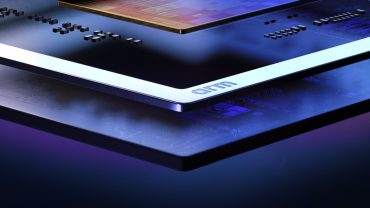
Built on a 5-nanometre process, clocked at up to 3.2 gigahertz, and grounded in open-source RISC-V architecture, the C950 is the product of Alibaba’s DAMO Academy research arm and its T-Head semiconductor unit. The company describes it as the highest-performing RISC-V CPU yet developed, claiming more than three times the comprehensive performance of its predecessor, the C920. Single-core SPECint2006 scores cited by the company exceed 70, a competitive threshold within the RISC-V ecosystem. Chief scientist Meng Jianyi pointed to the chip’s eight-instruction decode width and 16-stage pipeline as the structural foundations of that improvement, designed specifically to handle the bursty, parallel compute patterns that autonomous AI agents generate.
The choice of RISC-V is not incidental. By building on an open-source instruction set architecture, Alibaba sidesteps the licensing dependencies embedded in Arm and x86 ecosystems, retains full freedom to customise silicon features for specific inferencing tasks, and accelerates iteration cycles in ways that proprietary architectures do not permit. In a world of tightening technology controls, architectural sovereignty has become a competitive variable of the first order.
The Agentic Inflection
The C950’s arrival is timed to what Alibaba’s executives have taken to calling the “agentic AI” inflection. The descriptor refers to a qualitative shift in how artificial intelligence is deployed: away from single-query interfaces and toward systems capable of planning, reasoning, and executing sequences of tasks with minimal human intervention. The demands such systems place on infrastructure differ from those of conventional inference. They require low latency, reliable parallel execution, and the ability to handle sustained, complex workloads across extended time horizons.
Barely a week before the Shanghai conference, Alibaba launched Wukong, an enterprise platform built to orchestrate multiple AI agents across business workflows including document processing, spreadsheet automation, meeting transcription, and research synthesis, all within a single permission-aware interface. Its international counterpart, Accio Work, followed within days. Both products sit under the newly formed Alibaba Token Hub business group, a mid-March reorganisation that consolidates the company’s AI assets and formalises a strategic pivot from e-commerce primacy toward full-stack artificial intelligence infrastructure.
The C950 is the hardware logic beneath that software architecture. Alibaba’s T-Head portfolio is itself architecturally divided: the XuanTie series targets cloud computing and inference workloads where responsiveness is paramount, while the parallel Zhenwu line, anchored by the 810E accelerator launched in January, addresses the compute-intensive demands of model training. The distinction reflects a disciplined reading of where bottlenecks actually reside in agentic deployments. Training is intensive but episodic; inference, and particularly the orchestration of live agents, is continuous.
Owning the Stack
The deeper significance of the C950 lies not in any single benchmark but in what it enables across the full system. Alibaba is among a small number of companies globally that operate at every layer of the AI value chain: foundational models through the Qwen family, enterprise orchestration software through Wukong, and now purpose-built silicon through T-Head. The ability to co-design hardware and software in tandem is a structural advantage that pure infrastructure providers and chip-agnostic platform companies cannot easily replicate.
This vertical integration matters economically. When a company owns the inference chip and the model running on it, it can optimise the cost per token in ways that a firm relying on third-party hardware cannot. At the volume that Alibaba’s cloud business operates, even modest efficiency improvements translate into meaningful margin. The company has shipped a cumulative 470,000 AI chips as of late February, according to chief executive Eddie Wu’s remarks on the December-quarter earnings call. That base, while modest relative to global leaders, represents a growing installed platform on which T-Head economics can compound.
Revenue growth validates the direction. Cloud revenue for the December quarter reached 43.3 billion renminbi, equivalent to approximately six billion dollars, representing 36 percent growth year-on-year. AI-related contributions recorded triple-digit growth for the tenth consecutive quarter. Wu set a five-year target of more than one hundred billion dollars in combined annual cloud and AI external revenue, roughly five times current run rates. The C950 is the industrial foundation beneath that projection.
Geopolitics and the Production Question
American export controls on advanced Nvidia chips have done more than constrain supply. They have altered the investment thesis of every major Chinese technology company with serious AI ambitions. Alibaba’s response has been to treat the constraint as a design parameter rather than an obstacle: building domestically, iterating rapidly, and arguing that vertical integration can compensate for raw compute differences through optimisation.
The argument is not without merit. Whether it fully holds at scale remains genuinely uncertain. Fabrication details for the C950 have not been disclosed, though industry analysis points toward domestic or allied foundries operating at the 5-nanometre node. Yield rates, power efficiency, and the ecosystem maturity required to support large-scale enterprise deployment represent real challenges that benchmark scores do not resolve. Alibaba’s own disclosures acknowledge that current domestic accelerators trail leading foreign offerings in absolute performance terms. The company’s counterclaim is that the performance gap is less important than the optimisation gap, and that integrated control of the full stack can close the latter even where the former persists.
Markets have received the announcement with measured approval. Alibaba Group Holding shares touched an intraday high in Hong Kong trading on the day of the conference, extending a rally that has tracked the company’s AI-related announcements in recent months. Morgan Stanley reiterated an Overweight rating, highlighting the strategic value of in-house silicon for reducing supplier dependence and expanding gross margins over time. Analysts have also noted that the C950 strengthens the case for a potential separate listing of the T-Head unit, following the precedent of Baidu’s earlier spin-off of its Kunlun chip business.
The Long Competition
Alibaba is not building in isolation. Huawei’s Ascend series and a range of smaller domestic chip developers are pursuing comparable objectives through different architectural approaches. What distinguishes Alibaba is the breadth and coherence of its platform. Consumer and enterprise model offerings, agent orchestration software, cloud infrastructure at scale, and now a processor explicitly engineered for the workloads that architecture requires. Few companies anywhere in the world have assembled comparable vertical depth.
The C950 will not immediately alter the global semiconductor balance. Nvidia’s dominance in AI accelerators rests on years of software ecosystem development, manufacturing scale, and installed base inertia that no single chip announcement can displace. What the C950 does is establish that Alibaba is serious about the long competition, prepared to invest across the full stack, and building toward a position where hardware and software reinforce each other in ways that matter to enterprise customers making infrastructure decisions for the decade ahead.
The ultimate measure will be deployment outcomes. Enterprises trialling Wukong agents will decide, through practical experience, whether the underlying infrastructure delivers on its efficiency promises. That verdict will take time. For now, the C950 stands as precise and deliberate evidence of where Alibaba intends to compete, and how.